Homesickness

The short story is an unforgiving form. In the hands of those who mastered it (think William Trevor, for example), it can be the perfect distillation of experience and emotion, but it exposes those who prize a showy style, those who can’t resist the extra word, and those who haven’t learned that subtraction, not addition, is the key to perfecting it.

It would be very unfair to find fault with a writer like Colin Barrett because he hasn’t yet reached the heights attained by the likes of Alice Munro. He’s barely forty years-old, but has already won awards and attracted a lot of positive criticism for his stories. Homesickness is the first collection of his that I have read, and I enjoyed many of the stories very much. The setting is often the small towns and countryside of County Mayo, a place where I have spent some time over the years, and that enhanced the pleasure for me. Having said that, none of the stories made a deep impact, but I’ll be looking forward to what comes next from a talented writer.

Monica Jones, Philip Larkin, and me

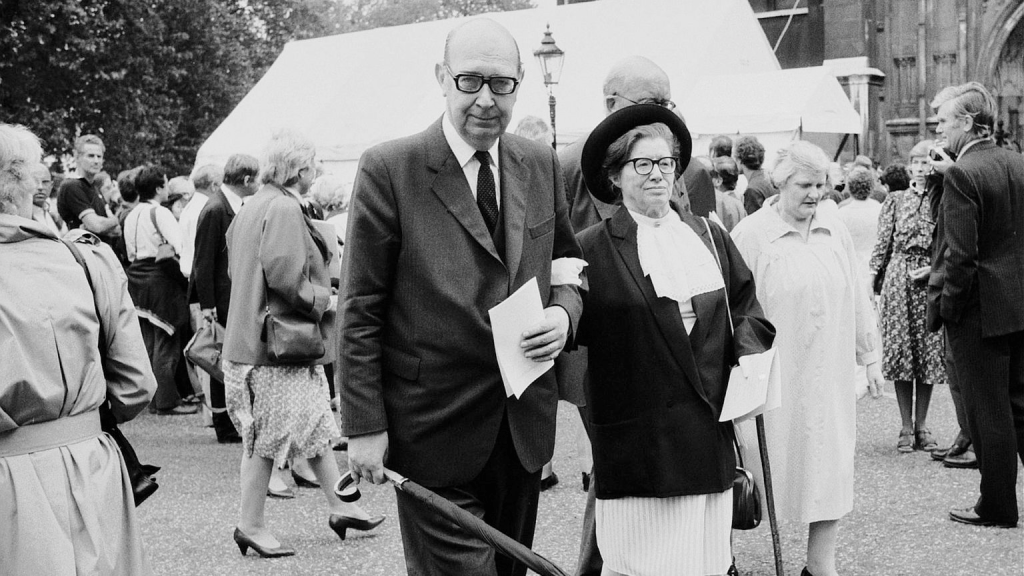
There is no way to avoid saying this. No one would have written a biography of Monica Jones if she hadn’t been the long-time friend, some-time lover, and correspondent for nearly four decades of Philip Larkin. She had a largely undistinguished career as a university teacher. She had few friends and was often disliked by colleagues and acquaintances. She was a racist and anti-Semite. Her life was blighted by bitterness, loneliness, and alcoholism. And yet from 1946 to 1985, Monica Jones was arguably closer than anyone to one of the greatest poets of the 20th century. She was the primary beneficiary of Larkin’s will and received on his death all his manuscripts and letters (many of which she destroyed).

John Sutherland, her biographer and one of the UK’s most distinguished literary scholars and critics, was one of Monica’s students in Leicester from 1960 and became her friend. That last part might mystify many readers because, on the evidence of this book, Monica was thoroughly and consistently horrible. But Larkin may have been even worse. I have read at least one biography of him, as well as collections of letters he wrote, not just to Monica Jones but also to his coterie of male friends like Kingsley Amis, so the nastier sides of his personality were familiar enough to me. Sutherland, however, has deepened my dislike of Larkin the man by filling out what we know about his stunted and manipulative personality, his misogyny, and his deceit.

Larkin and Jones might have been well matched in so many ways, but they were very bad for one another. He was a blight on her life for decades. She, though helpful to his poetic output in the early years, was treated appallingly, but lacking the self-confidence to break free from a toxic and deeply damaging relationship she was the co-creator of her own misery.

Letters to Gwen John

Celia Paul puzzles me. I find some of her paintings sublimely beautiful and others very crude. Aspects of her personality also puzzle me. She’s clearly a deeply private person, and yet has written two very self-exposing books. She complains that her reputation as a painter has been overshadowed by her relationship with Lucian Freud, but seems to have done as much as anyone to make people aware of that love affair and its consequences. Not that these paradoxes matter (if they are paradoxes); she has produced some wonderful paintings and published two memorable and sometimes beautifully written books.

When she set out to write her imaginary Letters to Gwen John, Celia Paul did so as a homage by one painter to another, not as a conventional biography. Nevertheless, the letters, written between February 2019 and November 2020, reveal a lot about the character and relationships of a deeply private artist whose work during her lifetime (1876-1939) was overshadowed by that of her brother, Augustus John, and her sometime lover, Auguste Rodin. The artistic and personal similarities between Celia and Gwen are striking; the ascetic tendencies in their habits, the absolute dedication to art, the longing to be loved and understood while living entirely on their own terms and in the shadow of great artists.

Few painters, at least in my experience, can write as well as Celia Paul, especially of love, longing, and the solitude on which her art depends. Letters to Gwen John, part biography, part autobiography, and part homage, is a book infused with sadness, vulnerability, and no little nobility.

All the Lovers in the Night

Fuyuko Irie, a freelance proofreader, spends her days looking for errors in manuscripts. She’s in her mid-thirties, lives alone and is almost entirely friendless. Other women make fun of her, for her drab appearance, for her unsociable nature, and, by implication, for her failure to make the efforts that convention dictates she ought to make: to please the boss, to flirt with men, to make herself prettier, and to follow that unrelenting diet of self-improvement served up in magazines and social media. Is she broken or damaged in some way, or is she simply refusing to play the game? As her isolation deepens and her dependence on alcohol increases, Fuyuko has a chance encounter with the enigmatic Mitsutsuka …

What ingredients need to be present for a happy life? Friendship, love, fulfilling work, purpose? What propels us forward and what sustains us when these are absent or when they stop being enough? Mieko Kawakami doesn’t shy away from important themes, but her delicate and oblique approach to them, her curiosity about how individuals confront or avoid them, and, most of all, the spareness and beauty of her style, make her one of the most interesting novelists at work today.

Intimations

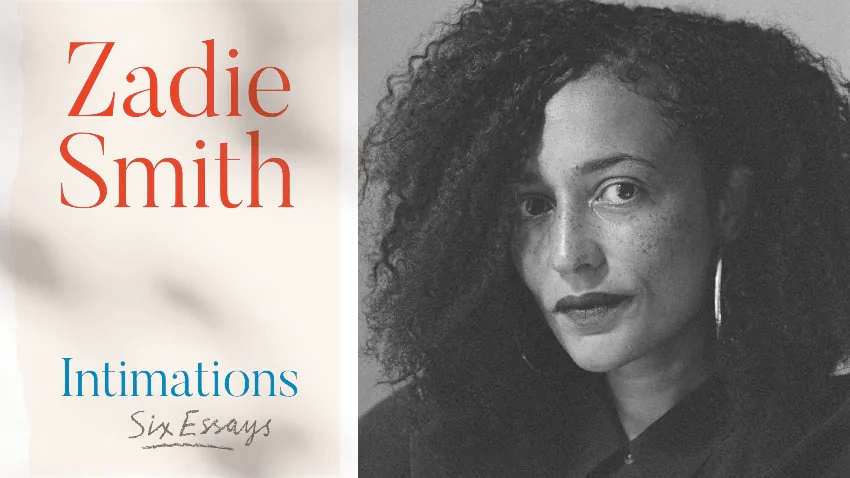
The imaginative literature provoked by the COVID-19 pandemic will be vast. Novels, essays, poems, and memoirs from those fear-filled days are already in the bookstores, and much, much more is coming. Inevitably, once we’re in a position to look back at that corpus, some of it will look rushed, wrong, and even downright opportunistic. I predict Zadie Smith’s slim volume of essays, Intimations, will stand the test of time. Published in mid-2020, these are thoughts from the earliest days of lock-down and quarantine, not some attempt at a sweeping review of the COVID years.

Intimations is a very personal memoir, and from it emerges a portrait of the author as a compassionate, sane, level-headed, and thoughtful human being in a time of dislocation and fear. I can see myself re-reading some or all of these short essays in the future. There is wisdom and humanity in them.