The Powerful and The Damned

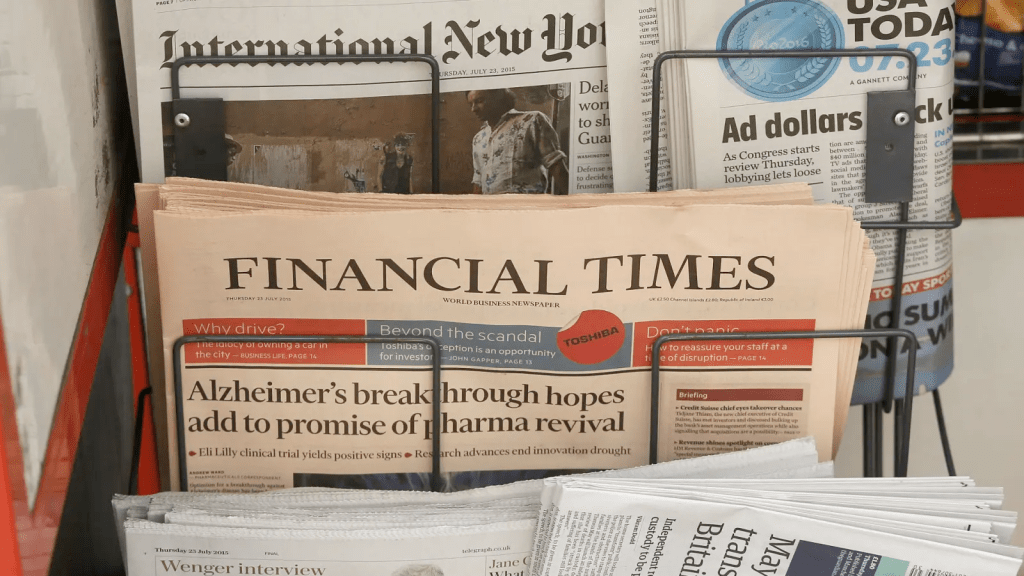
Lionel Barber was editor of the Financial Times from 2005 to 2019. Even in these times when newspapers are nothing like as powerful as they used to be, being the FT editor gives one access to some of the most powerful people in the world. Barber didn’t keep a regular diary during his tenure, but he has turned his contemporary meeting notes into a sort of journal. He had a ring side seat for many momentous occasions in world events such as the crash of 2008, the rise of Obama (and Trump), Brexit, and much more. Not surprisingly, he writes powerfully of his interactions with the great, the good, and the downright horrible. His list of interviewees and contacts is a roll call of the period’s power players. Putin, Trump, Blair, Obama, and MBS are all seen in close-up, not to mention a coterie of the wealthy and the self-important; Sheryl Sandberg, Eric Schmidt, Prince Charles, and Rupert Murdoch all have walk-on parts.

I gulped down The Powerful and The Damned in one day and two flights. It’s that kind of book – gossipy, insightful, indiscreet, and great fun. Barber is an entertaining chronicler of years that were filled with incident, not all of it good. He’s also very interesting on what it took to navigate one of the world’s great media brands in a time of technological transformation in the news industry.
Weather

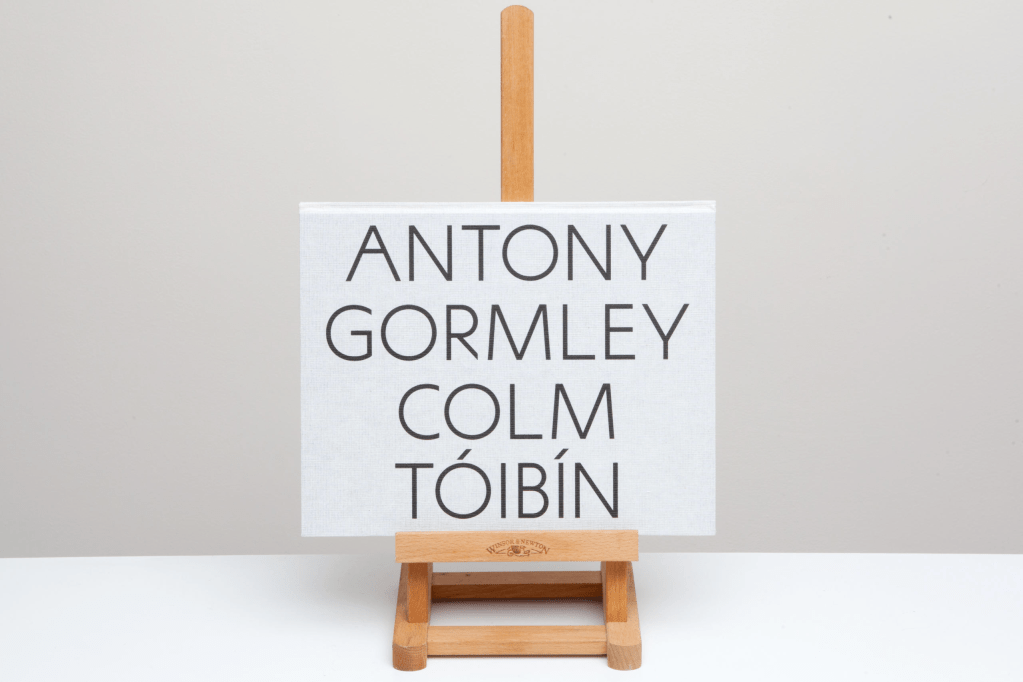
Weather is a collaboration between the author Colm Toibin and the artist Antony Gormley. Is it a short story illustrated by drawings, or a set of drawings enhanced by words? Perhaps it’s both or neither. I tend to think of it as two independent meditations on the experience of weather, one (Gormley’s) from the north Norfolk coastline, and the other (Toibin’s) from Ireland’s east coast.

Weather is a beautiful artifact, and a tribute to the arts of printing and book production. It is published in a regular edition and in a de luxe version by Enitharmon Editions. I had the pleasure of working nearly forty years ago with its founder, Stephen Stuart-Smith. Anyone interested in beautiful editions or artists’ books should take a look at Enitharmon’s catalog.

Kiasma & Oodi

A lot of cities could learn from Helsinki’s enlightened policies on supporting spaces for art and culture. For a long time the Finns have been investing in striking, modern buildings to house their galleries, museums, and libraries, and, if my recent visit is any guide, the investment is paying off. On a short gap between meetings this week, I made my first trips to Oodi (the Helsinki central library) and, a short walk away, Kiasma (Museum of Contemporary Arts).

One look at Oodi and you know you’re being sent a message. Public libraries matter. And what better way to proclaim their importance than by investing in them and by having the best architects design them?

Much the same is being declared at Kiasma, that part of the Finish National Gallery that houses the contemporary art collection. It opened first in 1998. With its sweeping and curving ramps, it reminded me of the Guggenheim in New York, but this is a place with a character all of its own. Its polished concrete floors and roughly textured white walls are a suitably blank space that allows the artworks to shine. My own visit coincided with ARS22, the tenth installment of an exhibition (first launched in 1961) that aims to present the latest trends in contemporary art. It’s the perfect place to see and experience some of the most challenging and provocative types of art.

Bravo Helsinki!

MUNCH

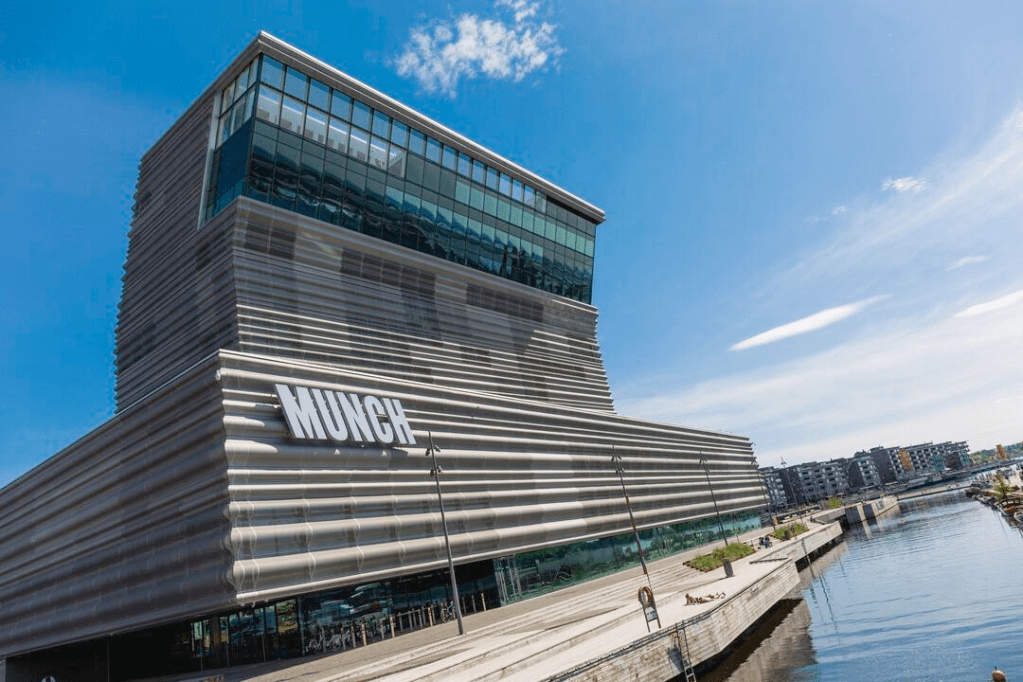
It was such a privilege to have after-hours access last night to MUNCH, the museum that opened in October 2021 to house the collection of more than 20,000 works gifted to the city of Oslo by the painter, Edvard Munch. I am grateful to the friends who organized it. Walking around near-empty galleries and having time and space to study so many magnificent artworks was an unforgettable experience.

It was also a revelation. I didn’t know how prolific Munch had been or how varied his output was. Paintings, of course, but also lithographs, photographs, film recordings, sculpture, and drawings. The visit deepened my appreciation of an artist with whom I had, up to that point, associated such a narrow range of images and moods (The Scream, of course, being uppermost in my mind). I saw paintings familiar to me, and many others for the first time. My visit, in other words, did all the things I hope for whenever I go to a museum – inform, inspire, educate, move, and enthrall.

Norwegians are very proud of Munch and have expressed that pride in the best possible ways; by building a beautiful and functional home for his art, and by thinking all the time of new ways to show that art to those who know and love it and those who will in the future.

The Beginners

There are people one meets who are relentlessly introspective. Of course, that’s not a problem until they feel the need to share the findings of that introspection at great length and in great detail. Then my patience wears thin. What is true for me in life is true also for me in fiction.

Anne Serre’s novel The Beginners is less about Anna Lore’s chance encounter with Thomas Lenz than the coup de foudre that follows. Lives are shaken and old alliances cracked. What follows is close to two hundred pages devoted to Anna’s emotional response. It’s courageous to create a narrator as difficult to like as Anna. But maybe the author finds her fascinating and admirable, I found her inexhaustible self-regard irritating. After a powerful opening to the novel, what followed quickly bored me.

The Unknown Unknown

Mark Forsyth’s funny and affectionate tribute to good bookshops is little more than a pamphlet, but its infectious enthusiasm will delight those who know that nothing beats a good bookshop when it comes to discovering books you never knew existed. I think he would be pleased to know that I had never heard of The Unknown Unknown before I spotted it by the cash desk of one of the world’s best “good bookshops”, Hatchards of Piccadilly. It was an unknown unknown.

Childhood, Youth, Dependency

The three volumes of autobiography written by Tove Ditlevsen were first published in Denmark between 1967 and 1971, but more recently have been issued in the United States and elsewhere as a single book called The Copenhagen Trilogy. It’s easy to see why. The power and emotional impact the memoirs make are so much greater when read back-to-back.

I had no knowledge of Ditlevsen until The New York Times put the trilogy on its list of best books of 2021. She was born in Copenhagen in 1917 into a working class family, and started to write poems as a child. She published nearly thirty books from the late 1930s to her death (from suicide) in the 1970s. The reputation she has had in her native country for decades has now started to spread globally because of the trilogy.

The first volume tells the story of a childhood marked by poverty and loneliness, circumstances only partly relieved by a growing talent for poetry. InYouth, Ditlevsen starts a series of poorly paid dead-end jobs and leaves the family home. As the war begins and the Germans invade Denmark, her writing career is launched, first with occasional poems in obscure magazines, followed by her debut collection and novel. Lovers, husbands, and friends come and go, but the centers of Ditlevsen’s life stay the same – the commitment to writing and her determination to live an unfettered, independent life. It proved along the way to be a life with quite some turmoil and pain. Love affairs, marriages, pregnancies planned and unplanned, break ups and reconciliations.

Ditlevsen writes with a precise, clear, and dispassionate style that is somehow hypnotic. The prose appears almost flat, devoid of flourish and intricacy, but nevertheless propels her story forward, pulling the reader into her experience. It’s an exceptional achievement, this ability to provoke deep engagement in the reader without ever giving up the cool, almost detached perspective she has on her own life. I cannot recall when I last read memoirs of such power and written with such unflinching, unsentimental honesty.

Elizabeth Finch

Not one of my schoolteachers or college professors was truly inspirational. Some were memorable, some were competent, and some were better than others, but I cannot think of a single one who stands out as having had a big impact on my thinking or outlook. My experience may be unusual because so many novels and films seem to feature brilliant teachers who transform the minds and lives of their students. Think of Dead Poets Society or The Prime of Miss Jean Brodie. In Julian Barnes’s latest novel, Elizabeth Finch, the eponymous hero is an adult education lecturer who makes a lasting impression on the story’s narrator, Neil.

In the first part of the novel, Neil recounts his experiences of being taught by Elizabeth and of their occasional meetings outside the classroom. When he inherits her papers and books, he writes an essay, inspired by Elizabeth, on Julian, the last pagan emperor of Rome, an essay that makes up most of part two of the story.

It’s a strange and slightly unsettling book. I hesitate even to call it a novel because in its least successful and most clumsy parts it has the feel of a manifesto or a tract. Study history. Be skeptical. Be stoical. Recognize what is up to you and what isn’t. Live modestly and authentically. All true, and all well and good, but as a work of fiction Elizabeth Finch, though intriguing and occasionally affecting, is unsatisfying. Like Elizabeth, it’s a little bloodless and a little too disengaged.