
I have written here many times about Robert Macfarlane’s books and about how much I admire them. He’s usually pigeon-holed as a nature writer. If that deters anyone from reading his books, all I can say is it shouldn’t. Like all great writers, Macfarlane writes about life. It so happens what he has learned about life has been learned while exploring and thinking about the wild places in our world, about forests and caves, about birds and fish, about water and wind, and about pretty much anything and everything in the natural world that catches his eye.
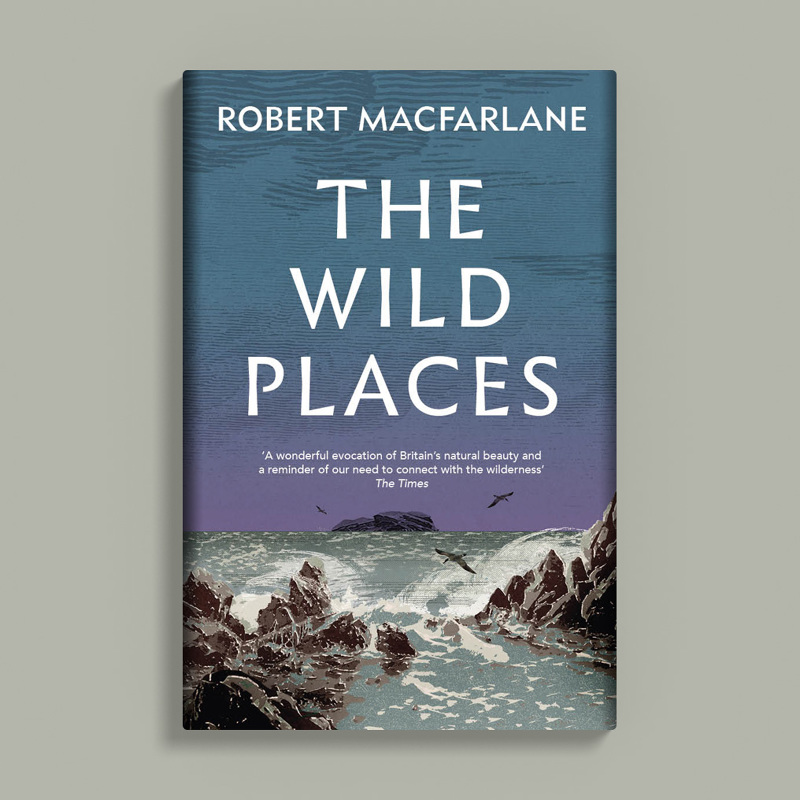
The Wild Places is one of his earlier books and was first published in the UK in 2007. Much of what I’ve grown to love in his later work is here. The infectious sense of wonder, the restlessness that urges him to explore, the curiosity, and the precision and beauty of the language he uses to express it – it’s all here in fifteen delightful chapters. Like all of Macfarlane’s work, The Wild Places is a celebration of what we have, a record of what remains, a lamentation of what’s already been lost, and a warning about what we stand to lose if we don’t care for the few remaining wildernesses. To my mind that makes it essential reading.
When he started the travels that led to this book, Macfarlane had fixed ideas about wildness and wilderness, a conception of them as standing outside time and human history. By the end of his journeys his perception had changed. Wildness could be found by looking deeply and closely into a nearby hedgerow. Wilderness was a place profoundly influenced by human history.
I read The Wild Places while staying in Maine, a place celebrated for its extravagant natural beauty. Even here, a fight is underway to protect the wilderness in areas like Katahdin Woods and Waters National Monument from threats of logging and encroaching development. There’s still time to heed the warnings of Macfarlane and others, but not much.
 Miscellaneous Musings