Notes from Walnut Tree Farm

Roger Deakin’s name crops up time and time again in the work of Robert Macfarlane, and always with affection and admiration. It wasn’t until I read The Wild Places that I felt the urge to learn more about the writer, film maker, and environmentalist who died in 2006. Deakin only published one book in his lifetime, Waterlog. Two others, Wildwood and Notes from Walnut Tree Farm, appeared posthumously. The latter collects together entries from Deakin’s notebooks made over several years and organizes them into a sort of monthly anthology. Here you’ll find descriptions of and reflections on the natural world, most of it within easy reach of the ancient cottage Deakin restored in Suffolk. Sometimes he strays further afield (Devon and Somerset, for example), but it’s mostly the woods, hedgerows, and animal life of East Anglia that catches his attention. And what attention it was. The color of a bird’s eye, the movement of a spider, the smell of newly cut logs – these details were pure joy for Deakin and noticing them was, in his mind, an obligation. Deakin’s life was one lived in the natural world, not distanced or separate from it, and his writing communicates so well the intense pleasure that came from that.
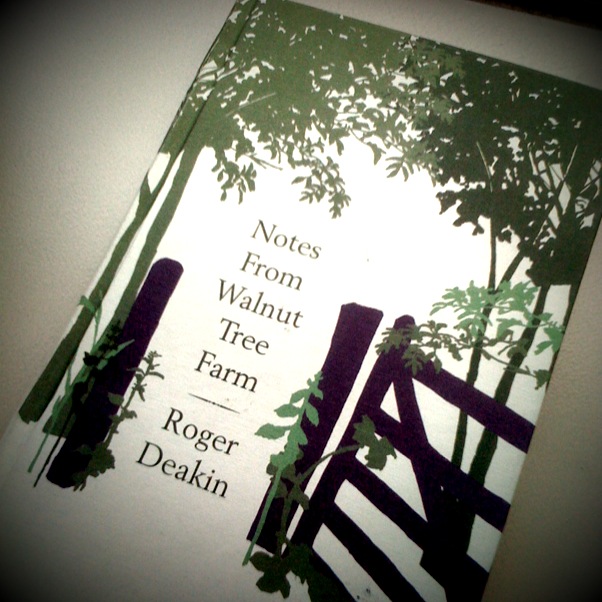
Russell Davies: blog all dog-eared pages: notes from walnut tree farm

English Pastoral

Andrew Fuhrmann reviews 'English Pastoral: An inheritance' by James Rebanks

I can’t pretend to have thought deeply about modern farming. Like many people, I’m aware in general terms of what the industrialization of farming and the demands for ever cheaper food have done to our environment and to rural communities. James Rebanks, on the other hand, has thought deeply about the subject. His family has farmed in England’s Lake District for more than 600 years. Just think about that. Six centuries of uninterrupted labor on the land, striving to eke a living generation after generation. English Pastoral is his sustained reflection on farming’s past, present, and future. It’s simply an extraordinary achievement and one that has been lauded since its publication last year. I’m not sure I would have become aware of it if it wasn’t being so widely promoted in London’s bookshops when I was there recently. Pretty much every store I entered had it displayed prominently, no doubt to capitalize on the huge interest in books about nature that we see at the moment.

Rebanks writes with deep compassion for his family, his land, his livestock, his community, and the wider world. He asks the tough questions. How do we feed a planet without destroying it? How do farming families make a decent living while respecting and preserving the lands they love? Rebanks doesn’t have all the answers. He doesn’t pretend to. Weaning the world from a diet of cheap food may be a commendable goal, but how do you achieve it when poverty is on the rise? English Pastoral is one man’s reflection on the serious challenges we face, informed by expertise, decency, and a determination to preserve the land for future generations. It’s a must-read.

Ronaldo’s Return

It was simple luck. I didn’t know when I bought the ticket weeks before that the game would end up being the second coming, the return of Cristiano Ronaldo to Old Trafford, sporting the famous number 7 shirt he had last worn in 2009. A good seat at an ordinary game was suddenly the hottest ticket in town, changing hands for thousands of pounds. It never occurred to me cash in. This was unmissable.

United won 4-1. Ronaldo, always one for the big occasion, scored twice. But this was never about a game of football. This was all about the return of arguably the greatest footballer ever to the club where his career took flight. I will never forget the storm of noise that marked his appearance on the field as more than seventy thousand people screamed his name in unison. The rest of the team – even the minor gods like Fernandes, Varane, and Sancho – were forced out of the spotlight and relegated to the supporting cast. Things will calm down. Most likely even the arrival of CR7 won’t be enough for United to compete this season against the likes of City, Chelsea, and Liverpool. We’re not stupid, just very sentimental, but it was a great day for dreamers.

Premier League: Cristiano Ronaldo to wear Manchester United number 7 jersey  again - Sports News

Blank Pages and Other Stories

BBC Radio Ulster - The Culture Cafe, Blank Pages Borders and Breakthrough  Artists

I’m glad that Bernard MacLaverty’s new stories appear so infrequently. Glad because they unfailingly show the time and care he devotes to them. Glad because the enjoyment they give is so intense that it’s best rationed and savored. It’s a pleasure tinged with melancholy, like the enjoyment of an autumn day when you feel suddenly an intimation of winter ahead. Only the best storytellers can pull it off; the sweetness of life infected yet intensified by loss. John McGahern, Colm Toibin, William Trevor, even James Joyce can do it. So can MacLaverty.

The twelve pieces in Blank Pages and Other Stories all seem to me to be, to some degree, reflections on aging and on the delicate and sometimes painful adjustments to relationships that come with it. A man loses his grandchildren on a day trip to the botanical gardens. Another makes a visit to his frail and declining mother in a far-off nursing home. A widow grieves for a son lost at sea. The settings may change, but not MacLaverty’s approach – the precise uncovering of the layers in a human life to expose the things that are common for all of us but unique to each of us. That’s his brilliance. Each of us lives through and endures in unique ways experiences that are known to every one of us.

There isn’t a mediocre story in this collection and there are at least two masterpieces. Sounds and Sweet Airs, apparently so simple and effortless, is a brilliant and poignant telling of a simple encounter between the old and the young. The End of Days, set during the pandemic of 1918, has Egon Schiele witnessing the death of his pregnant wife from Spanish influenza. Each captures an entire world in a few pages.

None other than Hilary Mantel once asked “Why is Bernard MacLaverty not celebrated as one of the wonders of the world?”. Well, he is by me, but the truthful answer is the world seems to show little appetite for the un-showy yet masterful art, crammed with nuance and subtlety, to which he has dedicated his writing life.

Maine musings

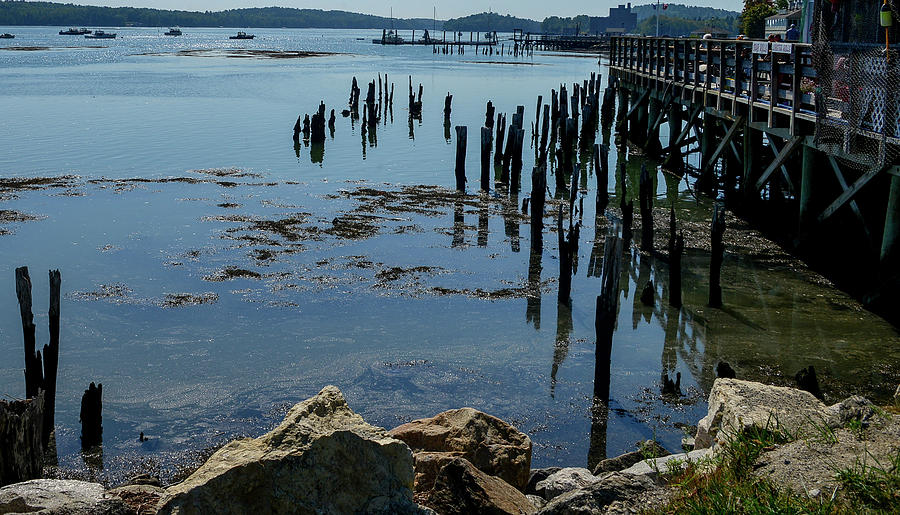
Wiscasset, Maine Photograph by Marilyn Burton

I recently packed up my laptop and headed to work from a cottage in Maine for a few days. Tropical storm Henri made the going slow, but a little more than six hours after leaving home I was hunkered down in Wiscasset watching the rain pour down. Promoted as the prettiest town in Maine, Wiscasset is a picturesque base from which to explore the central part of the state. Towns like Boothbay Harbor, Rockport, and Damariscotta are close by for those craving stores and restaurants. Wiscasset itself is packed with antique stores, many of which seem to open very irregularly and unpredictably. It has a handful of good eating places, including Red’s Eats, the lobster roll shack that has been feeding locals and visitors alike for decades. If long lines and high prices don’t bother you, Red’s is the place for you.

Of course, Maine’s glory is its open spaces. The gorgeous beaches, woods, and lakes attract a lot of visitors in the summer, but I found it easy to escape into places of solitude. Once Storm Henri had passed over, we had days of unbroken warm sunshine, perfect conditions for exploring the wild places of Maine. When I wasn’t working or exploring the neighborhood, I was reading Robert Macfarlane’s The Wild Places. Macfarlane could find plenty of wilderness in Maine, enough to satisfy even the most solitary of hermits. But it would be foolish to be complacent about that state’s wild wonders. The Wilderness Society does a great job raising awareness of the dangers.

The Wild Places

I have written here many times about Robert Macfarlane’s books and about how much I admire them. He’s usually pigeon-holed as a nature writer. If that deters anyone from reading his books, all I can say is it shouldn’t. Like all great writers, Macfarlane writes about life. It so happens what he has learned about life has been learned while exploring and thinking about the wild places in our world, about forests and caves, about birds and fish, about water and wind, and about pretty much anything and everything in the natural world that catches his eye.

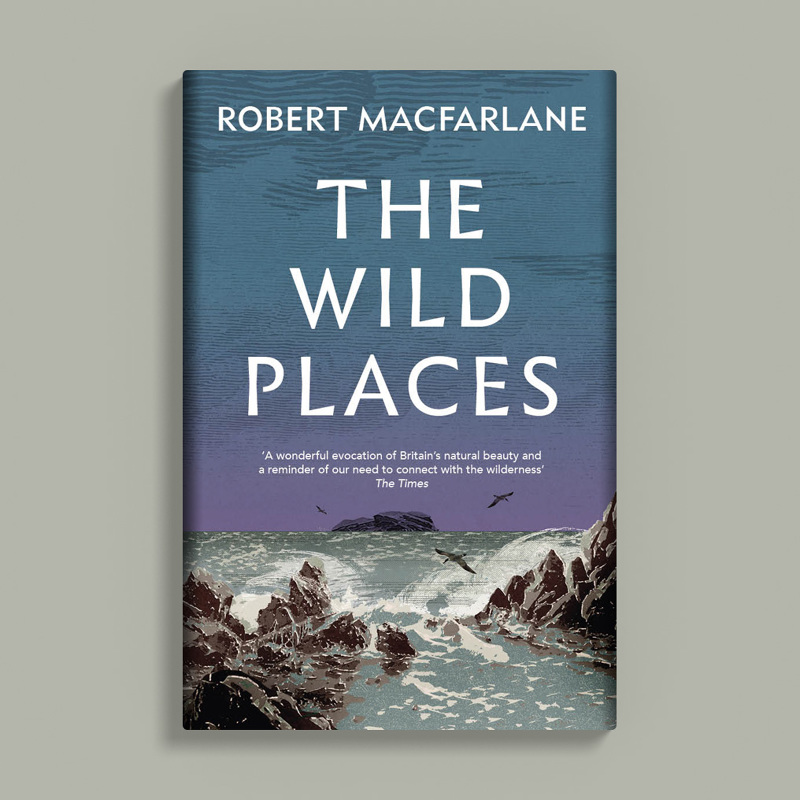
The Wild Places is one of his earlier books and was first published in the UK in 2007. Much of what I’ve grown to love in his later work is here. The infectious sense of wonder, the restlessness that urges him to explore, the curiosity, and the precision and beauty of the language he uses to express it – it’s all here in fifteen delightful chapters. Like all of Macfarlane’s work, The Wild Places is a celebration of what we have, a record of what remains, a lamentation of what’s already been lost, and a warning about what we stand to lose if we don’t care for the few remaining wildernesses. To my mind that makes it essential reading.

When he started the travels that led to this book, Macfarlane had fixed ideas about wildness and wilderness, a conception of them as standing outside time and human history. By the end of his journeys his perception had changed. Wildness could be found by looking deeply and closely into a nearby hedgerow. Wilderness was a place profoundly influenced by human history.

I read The Wild Places while staying in Maine, a place celebrated for its extravagant natural beauty. Even here, a fight is underway to protect the wilderness in areas like Katahdin Woods and Waters National Monument from threats of logging and encroaching development. There’s still time to heed the warnings of Macfarlane and others, but not much.

The Wild Places - Dan Mogford