
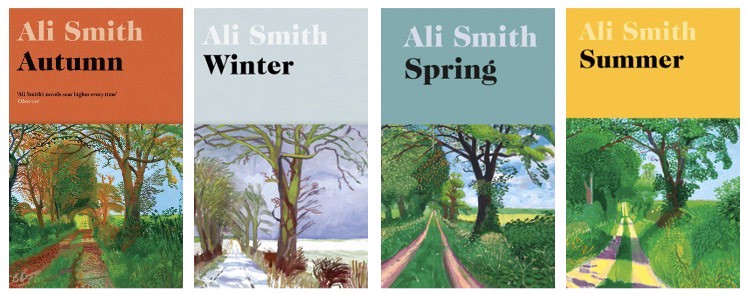
Two summers ago I decided to devote my vacation reading to Rachel Cusk’s Outline trilogy. I had been told the three novels were best appreciated if read back to back. This year I did the same for the four novels by Ali Smith that have come to be known as The Seasonal Quartet. I had previously read (back in 2017) the first in the series, Autumn, and decided to re-read it before moving on to the three others.
Autumn is so many things all at once. A plea for compassion, tolerance, and love in times marked by injustice, divisiveness, and hatred of others. An appeal to look carefully and see clearly, to try to understand what is happening right in front of us and what is being done in our name, to use and value the stories and images that artists give us to make sense of it all. That makes Autumn sound high-minded and grave. It is, but its tone is light and its prose shines with all the brilliance and vividness of a Pop Art painting. It provokes sadness at people’s apparently limitless stupidity and wickedness, but leaves you hopeful for the possibility of better days transformed by uncomplicated love.
Winter, the second in the series, has no plot or character connections to Autumn, but in terms of tone, style, and cadence they are very alike. It continues and intensifies the celebration of those who look beyond the reality presented to them, those who search for deeper meanings, and those who refuse to swallow the lies and distortions served up by the ruling “elites”. The oddballs, the refuseniks, the protestors, the non-conformists, and, of course, the artists. If Pauline Boty was the artist of Autumn, in Winter we have Barbara Hepworth, representing a shift from the city to the countryside and a concentration on the dangers posed to the natural world by the shortsighted destructiveness of humans.
Spring is my favorite of the four, perhaps because the main characters felt so vividly and realistically rendered. Richard, the maker of TV films, is himself unmade by loneliness and loss of purpose. Brittany, a prison guard in a horrible detention center for “illegal immigrants”, finds her life upended by a chance encounter with a mysterious child. The two travel to the north of Scotland where they meet Richard at his lowest ebb. It’s all brilliantly done and with such compassion and humor. At a time of cruelty, stupidity, and dishonesty in public life, Smith calls us to hold on to individual kindness, watchfulness, and honesty.
Summer brings the quartet to a perfect close, gathering the strands of the earlier novels and binding them together into something that by now is obviously a perfect whole. The full sweep of the series becomes clear, embracing a century marked by cruelty, horror, division, and ignorance and a present that shows all the signs of having learned nothing and of being more than enthusiastic about repeating it all over again. But, in the midst of it all, is the potential for individual acts of love, of courage, of seeing clearly, of standing up for what’s right, of not being fooled.
What an extraordinary achievement this series is. Anyone who has lost faith in fiction, or anyone who never had that faith to begin with, should read these four novels.
 Miscellaneous Musings