Ghostways

Eric Ravilious, Hollow Lane (1938) Eric Ravilious, Hollow Lane from 'The  Writings of Gilbert White of Selborne', ed., H.J. Massingh… in 2020 | Art,  Wood engraving, Woodcut

In my final book of 2020 I continued my journey through the works of Robert Macfarlane. That I should end the year in his company seems right in some way because he has been a delightful and consoling companion at various times in a year none of us will forget.

Ghostways brings together in a single, slim volume two essays previously published separately. Holloway first appeared in 2012 and Ness in 2018, with words by Robert Macfarlane and illustrations by Stanley Donwood. Both are works that defy categories. Ness is a prose-poem, a kind of elegy or lamentation inspired by Orford Ness, a ten-mile spit of shingle in eastern England where, for some seventy years or more, the British government tested deadly weapons in strict secrecy. Holloway tells of journeys in Dorset made by Macfarlane and his friends in 2004 and 2011 to find one of the ancient, sunken paths (hollow ways) that can be found carved into the soft landscape of Britain. “A route that centuries of foot-fall, hoof-hit, wheel-roll, and rain-run have harrowed into the land”.

As in other books he has written, the sense of place is strong in Ghostways, the experience of place not as something “out there” but as a realm in which a person can travel and slip – from one moment to the next – from the present into the past or the future. Language isn’t just how such experiences are communicated to oneself and others, but integral to the experiences themselves. Words are more than words, places are more than places. To experience is to express, and to express is to experience. In movement we encounter language, and in word-making we effect movement and change in the world. Places, like words, are vulnerable to loss, but both can be recovered with care and with sensitivity to our lived experience. Ghostways is a powerful and affecting hymn to the vulnerability of our world, and a strange and gentle reminder to us all to live in it fully and sensitively.
House of Correction

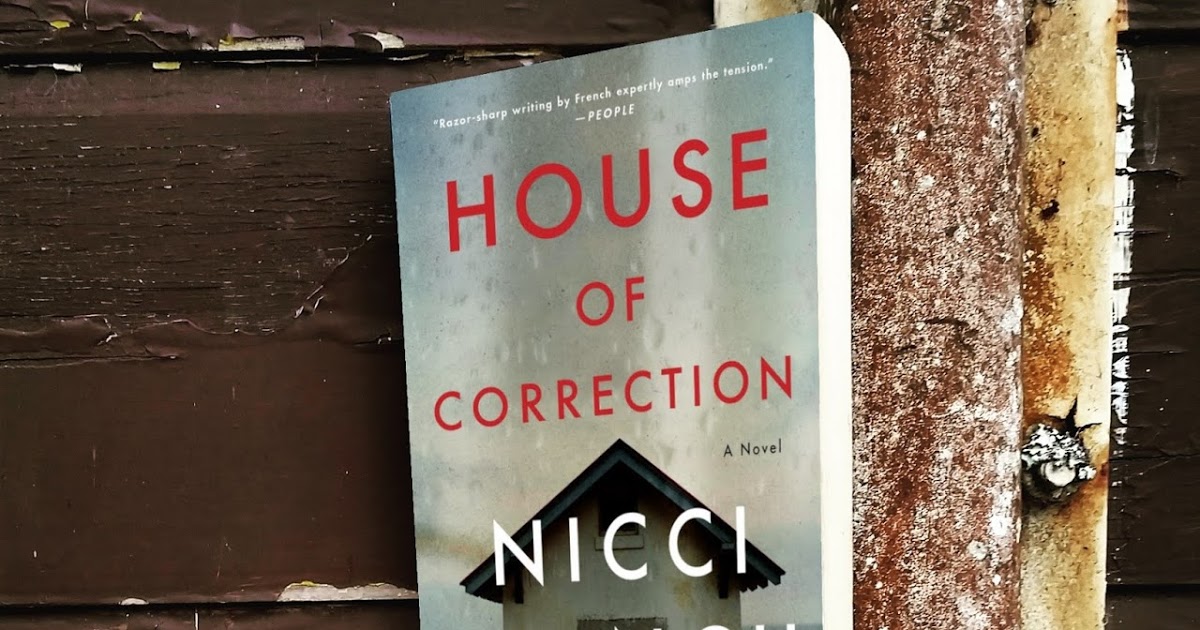
A woman sits in prison awaiting trial for murder. She dismisses her lawyer, preferring to conduct her own defense in spite of having no prior legal experience. How does she prove her innocence while incarcerated? Two thirds of House of Correction takes place within the prison, with the final third dedicated to the trial itself and its aftermath. Nicci French sets herself an interesting challenge, but it’s one she fails to pull off. Why? For the age-old reason that neither the central character nor the story line are interesting enough to make the experiment worthwhile. Plot ingenuity is all very well, but in itself it’s not enough to make a compelling novel.

but books are better: Book Review: HOUSE OF CORRECTION, by Nicci French

Caste

Isabel Wilkerson

Some books change how you think. The change is often a minute but permanent adjustment to how you see, experience, and explain the world, a deep, transformational shift that’s not necessarily visible to anyone else but you. Caste is such a book. It’s one of the two truly remarkable books I read in 2020, the other being Robert Macfarlane’s Underland.

America’s shameful history of racism is an ugly tapestry made up of millions of individual acts of discrimination, hatred, violence, and murder. Every generation, for more than three hundred years, has added to that tapestry and intensified its ugliness. Its persistence is due not just to those who actively wove it but to those who stood back and did nothing as it took shape. Isabel Wilkerson looks at American racism through the lens of caste, identifying and exploring parallels in two other notorious caste systems, the antisemitism of the Third Reich and the rigid, religiously defended divisions of India.

Although it has all the usual trimmings of an academic work (pages of notes, bibliography, and so on), Caste is written with the kind of affecting directness and warmth that is rarely displayed in a work of scholarship. It’s that combination that gives the book its remarkable power and authority. Wilkerson isn’t striving for lofty detachment. She wants to change her readers, their perceptions and attitudes. Whether or not you accept her central premise about caste (I did, but not entirely) doesn’t much matter ultimately. What matters is that her utterly compelling and brilliantly written account of racism in America should shake our understanding and that the jolt should reverberate insistently until far-reaching and permanent change is achieved.

The Lost Spells

The Lost Spells by Robert Macfarlane, Jackie Morris, Hardcover | Barnes &  Noble®

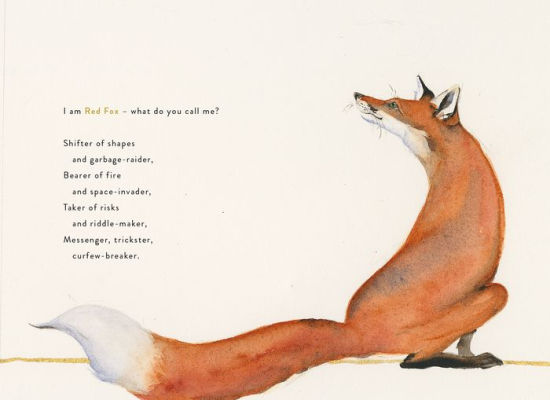
Anyone who knows the work of Robert Macfarlane knows that it’s suffused with a sense of loss. Lost words, lost creatures, lost habitats. His most recent book, The Lost Spells, picks up the theme and opens with these words. “Loss is the tune of our age, hard to miss and hard to bear. Creatures, places and words disappear, day after day, year on year”.

This is Macfarlane’s second collaboration with the brilliant artist, Jackie Morris. It’s a gorgeous set of spells or incantations to be read aloud, celebrating the beauty and fragility of the natural world. Various birds, trees, and creatures are rendered in stunning combinations of words and pictures. Vivid enchantments for our beautiful, endangered world.

The Lost Spells by Robert Macfarlane, Jackie Morris, Hardcover | Barnes &  Noble®