How To Be An Antiracist

Ibram X. Kendi’s bestselling book was published before the recent wave of protests that erupted following the murder of George Floyd in Minneapolis, but it has found a new audience as a result of that particular tragedy. It’s a deeply-felt, powerful, and sophisticated book that weaves Kendi’s life experiences with his thoughts on how we might arrive at “an antiracist world in all its imperfect beauty”.

I don’t want to over-simplify a book that is nuanced and subtle, but it’s heart can be found in these sentences in the opening pages. “The opposite of “racist” isn’t “not racist”. It is “antiracist” …. One either allows racial inequities to persevere, as a racist, or confronts racial inequities, as an antiracist …There is no in-between safe space of “not racist”. Starting from this observation, Kendi builds a transformative concept, pulling into its construction insights from history, law, ethics, and science. But this is no dry, academic thesis. This is a call to action, an appeal to personal transformation that grows into activism and ultimately institutional change. If that activism and change don’t materialize, it won’t be the author’s fault, but the responsibility of all those who read this remarkable book and fail to act urgently.

How to Be an Anti-Racist: Ibram X. Kendi — INFORUM

Death in Her Hands

Ottessa Moshfegh on her new book, Death in Her Hands | EW.com

Her name was Magda. Nobody will ever know who killed her. It wasn’t me. Here is her dead body. Isn’t that a great opening to a novel? Direct, but oblique. Clear, but puzzling and tantalizing. The words appear on a neat handwritten note that Vesta Gul finds when she’s on her daily walk in the woods near her home. Vesta, recently widowed, lives in a modest lakeside cabin with only her dog, Charlie, for company. Here is her dead body, the note says, but there’s no corpse, leaving Vesta to speculate about the victim, perpetrator, motive, and so much more. With almost nothing to work with, Vesta has the freedom to create a wildly elaborate narrative to explain the cryptic note, making Death in Her Hands a story about creating stories and the functions those stories perform in our lives.

Listen to anyone telling a story and you’ll learn much about the storyteller. That’s certainly true of Vesta Gul. As her imagination takes flight, we hear things about Vesta that she might not want us to know, about her snobbishness, her controlling husband, and her horrible marriage. Ottessa Moshfegh has written an intriguing, cryptic novel about the purpose and power of storytelling and the myths and memories we intertwine and confuse every day.

Unexpected Triumph

1973 Triumph TR6 for sale | Hotrodhotline

I’ve never longed to own a classic or vintage car. Sure, I’ve often admired them from afar (with particular fondness for the Aston Martin DB4 and Mercedes 300SL) and silently congratulated those who put so much time and money into preserving them. But owning one? No thanks. Too complicated, too risky, too expensive, and too time-consuming. So how did I end up with a 1972 Triumph TR6 in British racing green? Happenstance. Chance. Luck (good or bad, it remains to be seen). And, of course, never having wanted such a car, I’m now a zealous convert, speeding around with the top down and generally behaving like a careless teenager or, even worse, like an aging and disreputable “petrol head”.

This phase of innocent enthusiasm will pass and might be replaced by a new phase marked by remorse and incredulity. Who knows? For now, I’m smitten by a beautiful example of British design and engineering from a bygone age. The previous owner, a friend of mine, cared for the vehicle for many years. It’s now my turn to be its custodian – perhaps the most unlikely in its history – as it approaches its 50th birthday.

Blossomed Hours

A friend gave me recently a book published in 1922 by a publishing company called Orchard Hill Press that operated just a few miles from where I live today. At first sight the book seemed unexceptional. A faded, slightly tatty hardcover with an inscription from 1923, Blossomed Hours is what publishers used to call a miscellany: a collection of essays, poems, and reflections by Edward Howard Griggs. Griggs (1868-1951) was a university teacher who, according to the little information I could find on the web, delivered more than 13,000 lectures to more than 8 million people during his lifetime, mostly on subjects such as philosophy, history and culture.

I dipped into the book expecting to put it aside quickly, but found myself drawn in, initially by what The New York Times in 1903 called Griggs’s “easy flowing style, rich in imagery”. But the deeper I read, the more resonances I heard with today’s world. How about this?

Men need today, as every yesterday/To be called back from the senseless rush for gold/And fashion, dissipation – all the way/That dulls the heart of life and makes it cold/Back to love, work and simple, joyous play/Of those emotions that can ne’er grow old.

And this reflection on traveling seemed especially poignant in the lock-down imposed on us all by the pandemic:

To the man of thought, already cosmopolitan, the chief value of travel is in tremendously stimulating the flow of ideas and in contributing a wealth of illustrations. One may travel also through books and reflections. If the stimulation is less acute than that through the outer senses, it is wider in range and more fully at one’s command, without the waste and strain of movement from place to place. There are advantages to the stay-at-home, as well as for the traveller. If one opportunity is denied, use the other more sacredly.

Never judge a book by its (faded) cover.

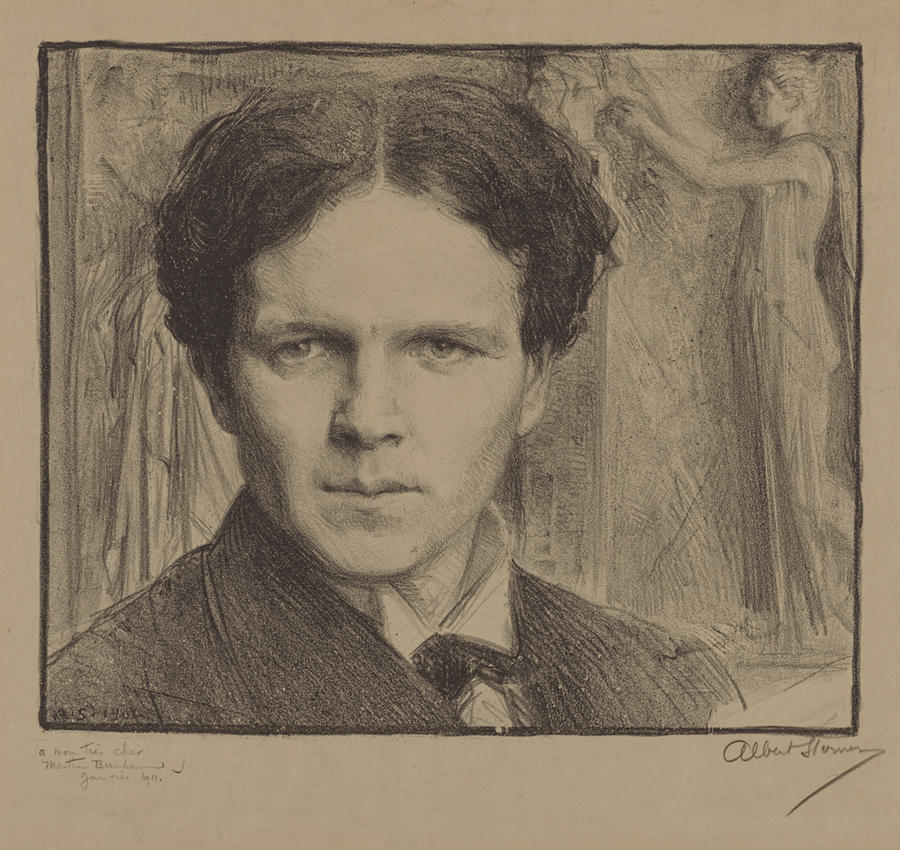
Portrait of Edward Howard Griggs | RISD Museum

Breasts and Eggs

In Mieko Kawakami's “Breasts and Eggs,” Oppression and Dissent ...

Mieko Kawakami is something of a celebrity in Japan’s literary community. She originally published Breasts and Eggs as a short novella in 2008. It was well received by critics and fellow writers and won an award. She then took the unusual step of expanding the original work and in its new form it’s her first novel to be published in English.

The narrator of Breasts and Eggs, Natsuko Natsume, has published one novel and is struggling to complete her second. A native of Osaka, but living alone in a small apartment in Tokyo, Natsuko dreams of having a child. With no partner and with a profound distaste for sex, she explores the world of donor insemination. Her sister, Makiko, comes to Tokyo determined to have breast enlargement surgery, accompanied by her teenage daughter, Midoriko, who refuses to speak and who communicates with her mother and aunt only through messages written in notebooks.

Breasts and Eggs is an unusual and powerful novel. Its theme is identity and its determination for a modern, Japanese woman by mores defined by men and tradition. The power of the book comes less from its theme than from the striking and unique voice of its narrator. As I read it, I felt, as I often do, that it should have been edited more aggressively. At 400+ pages it’s too long and its pace drags sometimes as a result, but this is an arresting and unusual novel. Kawakami is a special storyteller and it’s going to be interesting to follow what she does next.

A Japanese Literary Star Joins Her Peers on Western Bookshelves ...