
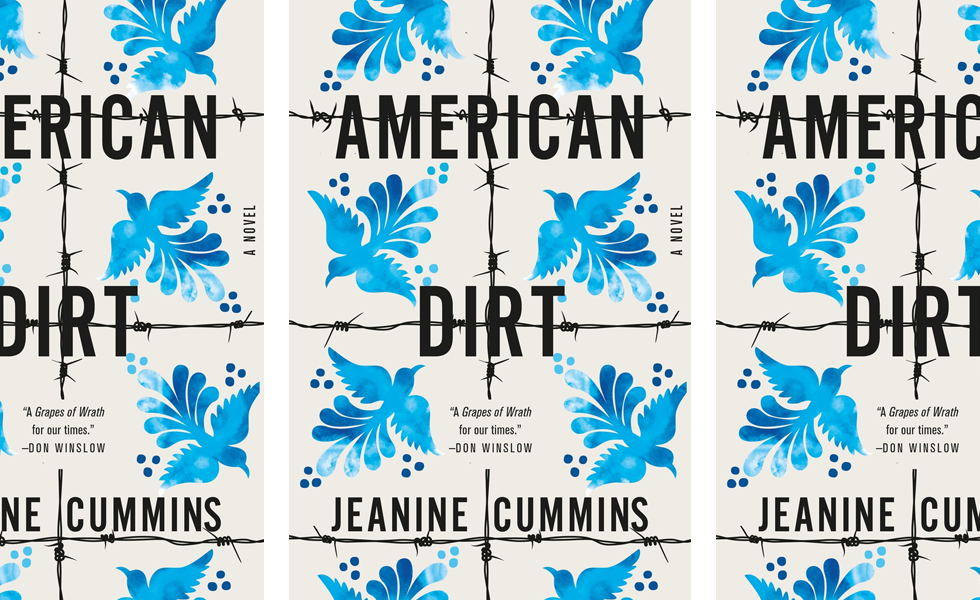
Anyone who loves novels and hasn’t been living in a cave for the past six months has heard of American Dirt. It attracted plenty of positive reviews before it was published from the likes of John Grisham and Stephen King, was an Oprah Book Club choice, and earned its author, Jeanine Cummins, an advance of $1 million. What could possibly go wrong? Well, almost everything seems to be the answer to that question. In a very public argument that seemed to me to generate far more heat than light, critics lined up to level a slew of accusations against Cummins. The most persistent complaint can be summarized by a phrase I wasn’t familiar with before the controversy, “cultural appropriation”. The heart of the accusation seems to be that Cummins, a white woman with no direct personal experience of migration, cannot and should not “appropriate” the experience of a Mexican woman forced to flee her home in Acapulco and seek safety in the United States because of threats from a drug cartel.
This seems at first sight to be nonsensical. Isn’t fiction by definition fictional? Beatrix Potter was never a rabbit, J.K. Rowling was never a boy, and Tolkien was never a hobbit. Literature is the expression of imagination. Jeanine Cummins is entitled to imagine the experiences of migrants from Central America and to set down for readers the expression of that imagination. Readers will decide the value, veracity, and validity of that expression, but they aren’t entitled to deny her right to make it.
As for the novel itself, it’s a heartfelt and sincerely told story. It’s also an undeniably gripping account of some of the terrible sacrifices made daily by those looking for new lives in the United States. But – and this is where some of Cummins’s critics are on safer ground – the central character (Lydia) is never entirely convincing. Perhaps I was influenced more than I realized by the furor surrounding American Dirt, but Lydia’s voice never felt fully authentic to me.
 Miscellaneous Musings