Musings on Moving

How to talk to others about not traveling during the coronavirus ...

“One can travel this world and see nothing. To achieve understanding it is necessary not to see many things, but to look hard at what you do see.” Giorgio Morandi.

How are you coping without traveling? That’s the question I have been asked most often since Covid-19 forced almost everyone to stay close to home. I returned on February 28th after three weeks in Tokyo, London, and Paris and, apart from one or two short trips to Manhattan, haven’t wandered more than ten miles from home since that day thirteen weeks ago. That’s not likely to change much until the end of August at the earliest. If that proves to be the case, it will be the longest period in more than thirty years that I haven’t stepped on board an airplane.

Do I miss it? In some ways, no. Who could possibly miss long lines at airport security, airline food, weather delays, lost baggage, and 16 hour flights? There’s a lot to be said for discovering or re-discovering the wonderful places just beyond my doorstep. But much is lost in a lock-down. What I miss is that particular and unique type of engagement with family, friends, colleagues, and acquaintances that Zoom and other tools can’t hope to replace or emulate. I miss the sensations: the sights, smells, and sounds of places that I had planned to visit in these months – Lilongwe, Beijing, Oslo, or wherever. And I miss the thoughts and feelings that those sights, smells, and sounds would have evoked. That’s what Giorgio Morandi (and others like him who rarely travel) don’t understand. Traveling isn’t about seeing things and places. It’s about the engagement of all the senses and the personal transformations, small and large, that come with that engagement.

Those of us who love to travel will do so again. We might do it differently, but we’ll do it. We’ll most likely do it more carefully and thoughtfully. The pandemic has taught us or reminded us what’s truly valuable and what’s expendable. And what’s top of my travel list when conditions allow me to wander again? London and West Cork. After that let’s take it one precious step at a time.

Our Riches

Edmond Charlot opened a small bookshop, publishing company, and lending library in Algiers in 1935. He was twenty years old. He called his new bookshop Les Vraies Richesses (Our True Wealth), after a book by Jean Giono. Charlot published the early work of his friend Albert Camus, but his contribution to the world of books goes far beyond that happy piece of talent spotting. Putting literature into the hands of readers was the driving passion of his life, a passion that drove him into occasional conflict with governments and occupying powers and more than occasional financial hardship. His courage and single-mindedness were extraordinary and reminded me of the personal sacrifices publishers and booksellers still make every day in conditions hostile to free thought and expression.

Kaouther Adimi has written a sweet, elegiac book about this remarkable man. Part history and part biography, Our Riches is more than anything a meditation on books and what it means to love reading, publishing, and selling them.

Edmond Charlot - Wikipedia

The London Train

Discovering a new author is one of the great joys of reading. I came across Tessa Hadley for the first time only last year and I have been reading through her short backlist with huge pleasure since then. Late in the Day and The Past were two of the best novels I read last year and, although it’s a little early in 2020 to be definitive, I don’t expect to read a better or more enjoyable novel than The London Train this year. Its structure is unusual. What appear to be two largely separate stories, linked through the simple device of journeys between two places, London and Wales, come together cleverly just before the end of the book. The first of the stories, The London Train, tells of Paul’s search for his young daughter who has gone missing in London. Only Children, the second story, tells of a journey in the opposite direction and of Cora’s retreat from an unhappy marriage to her family’s home in Wales.

Hadley’s writing stands within a very strong English tradition. It puts me in mind sometimes of the likes of Margaret Drabble and Anita Brookner. Maybe it’s the settings – the emotional lives of the English upper middle classes with all that turbulence beneath the polite surfaces – or the understated style in which it’s all brought to life. The precise and almost forensic way in which she peels back the layers of apparently unremarkable lives and uncovers the longings and losses beneath is so impressive.

The London Train

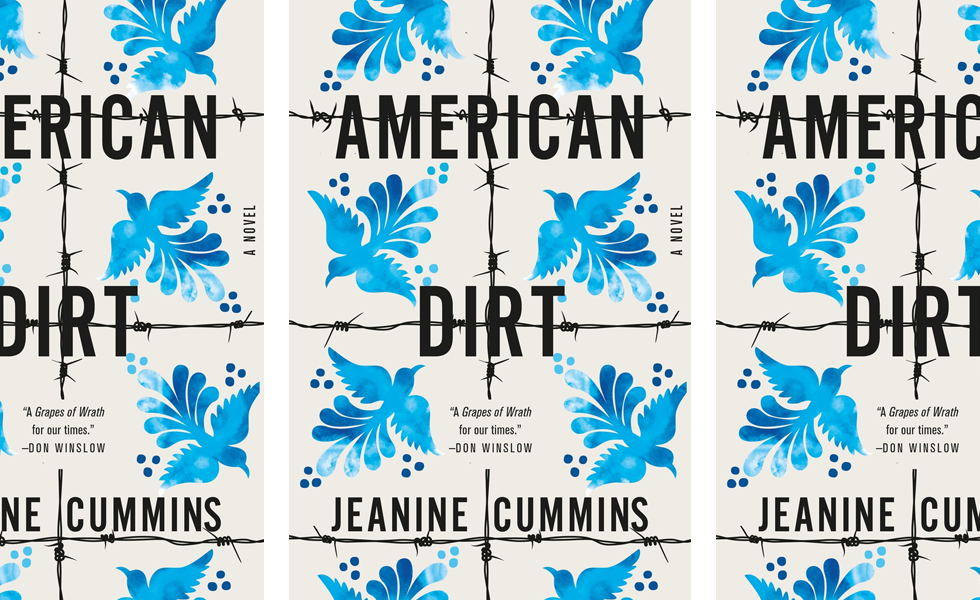
American Dirt

17 Great Books to Read Instead of American Dirt - The Texas Observer

Anyone who loves novels and hasn’t been living in a cave for the past six months has heard of American Dirt. It attracted plenty of positive reviews before it was published from the likes of John Grisham and Stephen King, was an Oprah Book Club choice, and earned its author, Jeanine Cummins, an advance of $1 million. What could possibly go wrong? Well, almost everything seems to be the answer to that question. In a very public argument that seemed to me to generate far more heat than light, critics lined up to level a slew of accusations against Cummins. The most persistent complaint can be summarized by a phrase I wasn’t familiar with before the controversy, “cultural appropriation”. The heart of the accusation seems to be that Cummins, a white woman with no direct personal experience of migration, cannot and should not “appropriate” the experience of a Mexican woman forced to flee her home in Acapulco and seek safety in the United States because of threats from a drug cartel.

This seems at first sight to be nonsensical. Isn’t fiction by definition fictional? Beatrix Potter was never a rabbit, J.K. Rowling was never a boy, and Tolkien was never a hobbit. Literature is the expression of imagination. Jeanine Cummins is entitled to imagine the experiences of migrants from Central America and to set down for readers the expression of that imagination. Readers will decide the value, veracity, and validity of that expression, but they aren’t entitled to deny her right to make it.

As for the novel itself, it’s a heartfelt and sincerely told story. It’s also an undeniably gripping account of some of the terrible sacrifices made daily by those looking for new lives in the United States. But – and this is where some of Cummins’s critics are on safer ground – the central character (Lydia) is never entirely convincing. Perhaps I was influenced more than I realized by the furor surrounding American Dirt, but Lydia’s voice never felt fully authentic to me.