Brexit Day

Image result for brexit blues

On Monday afternoon I took the train from London to Brussels. The following day I flew from Brussels to Rome and the day after that flew back to London. Nothing special about that you might think, but yet a unique and emotional experience for me because most likely it’s the last time I’ll do it all as a citizen of the European Union.  Although I’m too young to remember much about the UK’s entry in 1973 into what everyone then called the EEC, I grew up believing in the “European ideal” and still do to this day.  Today is Brexit Day and, more than ever, I regret deeply the outcome of the referendum in 2016 and will never forgive David Cameron and his cabal for the stupidity, fear-mongering, and lies that led to it.

Sure it was easy to poke fun at the Brussels bureaucrats, to sneer at their occasionally ludicrous regulations and directives, and to complain about the tax burden. But the heart of the EU for me was always a treasured principle: the idea that removing barriers and encouraging easy movement across borders promoted understanding and peace. That idea is too strong to be broken by the idiocy of British politicians but it’s certainly vulnerable to ugly nationalism and xenophobia, signs of which can be found in so many European countries right now.

In practical terms Brexit means minor inconveniences for me and my generation. A different passport, or maybe more bureaucracy when I travel around the continent. It’s much more serious for my children. It’s my hope that over time their generation’s elected leaders will re-discover the high ideals that drove the formation of the EU.
Of Walking in Ice

Image result for of walking in ice herzog

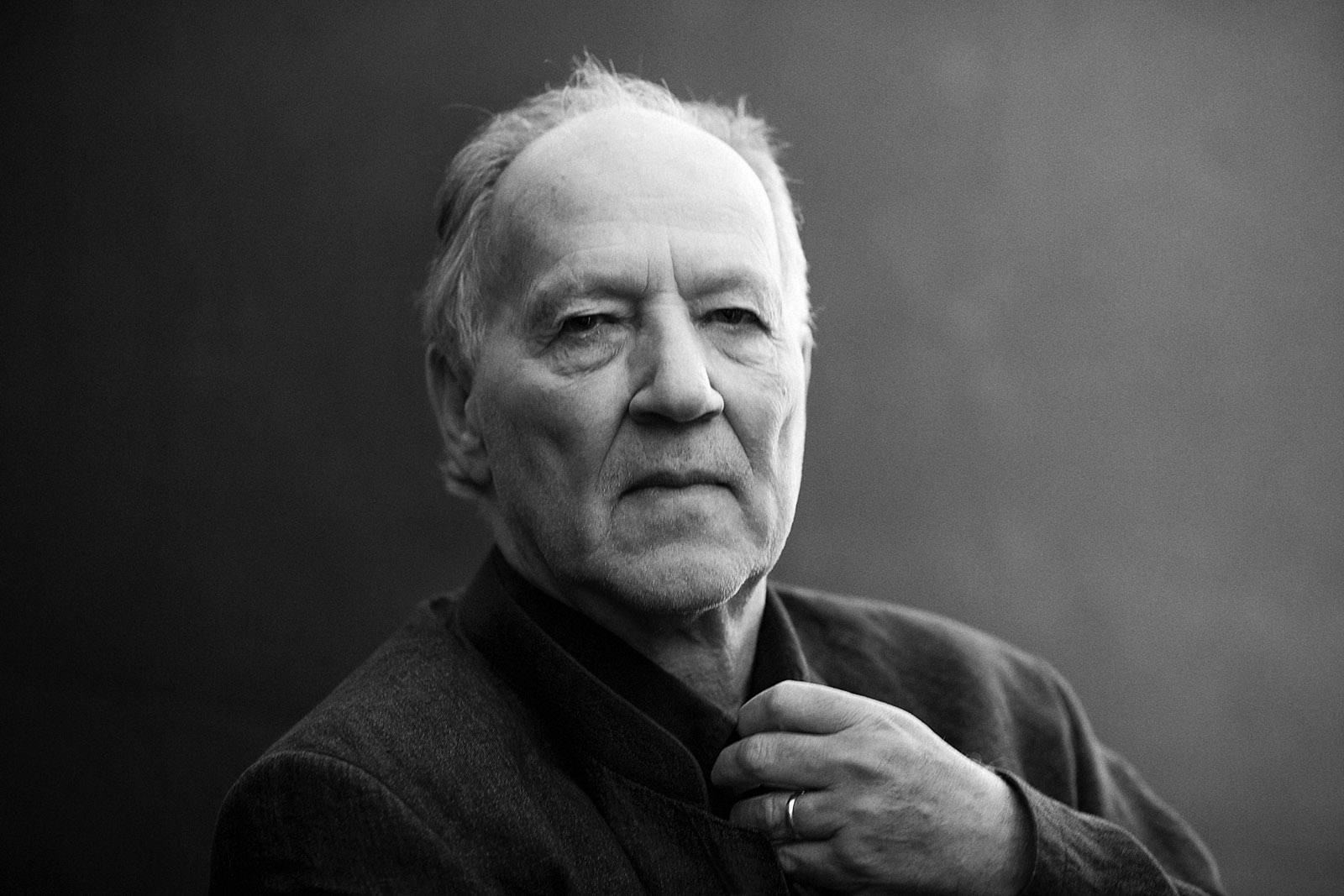
I love to walk but I don’t walk to relax. Wherever I walk – along city streets or in the countryside – I find my mind races more than usual, bombarded by what I see and by the memories, speculations, and questions that the act of putting one foot in front of the other seems to stimulate.  Physical wandering provokes mental wandering. “While walking, the brain rages” as Werner Herzog puts it.

In the hard winter of 1974, Herzog walked from Munich to Paris to see his mentor Lotte Eisner, believing that Eisner, dangerously ill at the time, wouldn’t or couldn’t die if he set out to see her on foot. Strange? Yes, of course, but if you know Herzog’s films you’ll know he’s no stranger to strangeness. Even the title is puzzling. Who walks in ice (instead of on it)?

It’s not easy to classify this short book. Journal, travelog, fairy tale, and meditation all wrapped together in one remarkable, engrossing package. It’s presented in the form of a diary but it’s a diary in which observations are entwined with fantasies and imaginings. It is, above all, an exercise in magical thinking and perhaps a very successful one. Lotte Eisner lived for nine years after Herzog’s pilgrimage.

The Wych Elm

Image result for tana french the witch elm

For anyone familiar with French’s earlier novels set in and around the Dublin murder squad, The Wych Elm (or The Witch Elm if you’re reading the American edition) may come as a surprise, welcome or otherwise. At 500 pages, it’s a wordier, baggier book than what came before. More ambitious, more obviously “literary”, it’s a novel in which French liberates herself from the constraints normally imposed by the traditional “police procedural”.

Her preoccupations here are trauma and recovery and the relationship between memory and identity. But above all this is a novel about families. Their secrets, lies and betrayals, but also their power to heal and repair.  If all this sounds dry, it isn’t. French, like all good novelists, knows about pace, plot, and tension and how to work them all to avoid her narrator’s slightly self-obsessed musings becoming dull. Having said that, French’s editor ought to have told her to prune the manuscript hard. It’s far too long and midway through it I found myself longing for her to move things along a little more quickly.

Travelers in the Third Reich

There’s something very compelling about reading a contemporaneous account of an historical event. I still remember how much I enjoyed dipping into The Faber Book of Reportage when I first bought it more than thirty years ago and reading eyewitness accounts of events like the funeral of Queen Victoria or the assassination of Gandhi. It felt like raw history with all its immediacy and urgency and with none of the layers of explanation, interpretation, and analysis. In Travelers in the Third Reich, Julia Boyd had the simple but brilliant idea of telling the story of Germany between 1919 and 1945 exclusively through the experiences of visitors: foreign eyewitnesses to the events of those momentous years.  Tourists, exchange students, diplomats, journalists, and many others give us, through their letters, postcards, reports and articles, firsthand accounts of what it was like to be in Germany during the fall of the Weimar Republic, the ascent of Hitler, and the Second World War.

The virulent antisemitism that found its most grotesque and tragic expression in the death camps started to appear in Germany almost before the ink was dry on the Treaty of Versailles.  From the moment people started to express hateful anti-Jewish propaganda, others (Germans and foreigners) began to look the other way or find excuses. At every stage – from the appearance of antisemitic posters in 1919 to the boycotting and destruction of Jewish-owned stores in the early 1930s to the forcible removal of Jews from their homes and to their systematic murder – ordinary witnesses found ways to exonerate the guilty and to explain their hideous ideology.  What made it possible for so many to be so complicit? Fear of communism. Ancient, deeply buried and hideous anti-Jewish tropes. Guilt about how the allies had punished the German nation at the end of the First World War. Wilful naivety. The superficial glamor of the Nazis with their choreographed festivals, uniforms and music. The willingness to excuse anything as long as economic growth was achieved and sustained.

It’s all complicated but some simple things became shockingly clear as I read all these accounts. Some people don’t or can’t see what’s right in front of them. Some people always want to believe that decency will prevail. Some people care only about themselves. Some people are frightened to speak up. Some people support disgusting ideologies.  Edmund Burke summed it up as long ago as the 1770s. “The only thing necessary for the triumph of evil is for good men to do nothing“.

Compelling stories of the past ought to make us think about the present. We live in a time when political leaders feel no hesitation about spreading horrible lies about ethnic and religious groups. Attacks against Jews and Muslims are on the rise almost everywhere. Recent research showed that 55% of Americans don’t know how many perished in the Holocaust. Anyone who thinks that what happened in Germany eighty years ago couldn’t be repeated isn’t really much different from those who strolled around Munich and Berlin in the 1930s and 1940s admiring the pretty window boxes and smart uniforms.

Image result for travelers in the third reich julia boyd

Parisian Lives

Image result for deirdre bair parisian lives

So many of the best scholarly biographies I’ve read have been written by women that it never occurred to me that this was an area of scholarship which until relatively recently was dominated by men. I can thank Deirdre Bair for setting me straight on that point. When she started work on her award-winning biography of Samuel Beckett in 1970, she met a degree of resistance and prejudice from male scholars that today takes one’s breath away. Parisian Lives is Bair’s memoir of her experiences of writing the lives of two giants of the literary world, Samuel Beckett and Simone de Beauvoir, and what a story it is.

I’ve read many accounts of Beckett’s life. He was clearly not only one of the greatest writers of the 20th century, but also a sincerely good and kind man.  Stories of his generosity are legion. Despite all of that, the prevailing impression of him as some kind of “secular saint”, fostered by his large and loyal coterie of friends, doesn’t tell the whole story.  Beckett could be and occasionally was difficult, manipulative, and suspicious, and he was far more concerned about his posthumous legacy than he wanted anyone to believe. These facets of his character are properly exposed in Bair’s otherwise affectionate account of her interactions with him in the 1970s. He may have had flaws, but a great writer and a great man emerges intact from this memoir.

De Beauvoir was a different beast entirely. She wasn’t far from the end of her life by the time Bair met her and she comes across as a much diminished figure in this memoir, admired globally as an icon of the feminist movement but drained by age of the intellectual power she once wielded.

There’s a third important person at the center of this mostly gentle story: Deirdre Bair herself. As much an account of the challenges of being a woman scholar in the 1970s and 1980s as it is about pursuing Beckett and De Beauvoir, Parisian Lives feels sometimes overly defensive and score-settling in its tone, but she can hardly be blamed. She achieved a lot against the odds and was often badly treated by men who ought to have known and behaved a lot better.

Image result for deirdre bair parisian lives

Last year’s reading

A year ago I made a resolution to read more. I succeeded. I completed thirty-eight books in 2019, twelve more than in the previous year. Looking back on what I read last year, the most pleasing thing was the exceptionally high quality of pretty much every book I chose. There was only one outright dud, The Flight Portfolio (which I abandoned early on). Everything else was a delight to read.

Just as in previous years, I read more fiction than non-fiction in 2019, but not overwhelmingly so. The fourteen non-fiction titles I finished included my “book of the year”, Say Nothing by Patrick Radden Keefe. I read a lot about art and that surprises me because it wasn’t a particular intention of mine at the beginning of the year. It just happened somehow.

I read and occasionally re-read some wonderful novels. Hold my feet to the flames and force me to choose my favorite story of 2019 and I’ll probably go for Late in the Day by Tessa Hadley,  but Sarah Moss’s Ghost Wall, A Month in the Country by J.L. Carr, and Reunion by Fred Uhlman were other highlights of the year.

Looking at the pile of books waiting to be read, 2020, or the next few months in any case, is shaping up to be much like 2019. I can’t wait to get started.

Image result for reading books

A Month in Siena

Image result for a month in siena

It’s strange how particular themes keep repeating themselves in the books I have read recently, even though on the face of it the books themselves are very different one from another. The idea, for example, that looking at a work of art should open up the landscape of one’s mind or that the process of traveling to unfamiliar places should provoke a corresponding interior journey.  These are motifs that have come up time and again in books I have been reading this year. Is it nothing more than coincidence? Or am I somehow subconsciously looking to read the same book over and over again or picking books that illuminate from different vantage points very basic questions about why we travel and why we look at art?

In A Month in Siena, Hisham Matar, a Pulitzer prize-winning writer with Libyan heritage and with deep roots in London and New York, travels to Italy to immerse himself in the School of Sienese painting which flourished in the thirteenth, fourteenth, and fifteenth centuries. He writes about his encounters with eight masterworks from the School, painted by Duccio, Ambrogio Lorenzetti, and others. The works under Matar’s scrutiny and through his telling become doorways to the city of Siena, to its ancient traditions, to some of its residents, to the author himself, and to the wider world.

Matar has written a small gem of a book.  His curiosity, intelligence, and humanity not only illuminate a lovely and profound account of his time in Siena. Those same qualities are trustworthy pointers to how to live as we enter a new year.

Image result for a month in siena