The Sacrament

The hideous abuse of children by Catholic clergymen and its concealment by the Church’s authorities continue to appall the world. One scandal has followed another, leaving many innocent believers with their faith in tatters and asking how their belief in an all-loving God can be sustained in the face of such systematic evil.  Olav Olafsson’s latest novel, The Sacrament, approaches the question through the experiences of a nun sent to Iceland by The Vatican to investigate allegations of abuse in a Catholic school. The mission she’s given pulls her from the quiet, sequestered life of a convent in France, a life marked by simple routine, a life lived in a community, a chapel and a rose garden. Her visits to Iceland, separated by decades, bring her into touch not simply with individual and institutional evil. She’s also forced to confront her past and the terrible decisions she made as a young student in Paris, choosing security, fear, and shame over the possibility of love.

The Sacrament isn’t a perfect novel, but its accomplishments are significant. The atmosphere it creates through simple storytelling is striking and long-lasting. Olafsson creates a world in which one voice, clear but uncertain, speaks for the tens of thousands left voiceless by the cruelty and ambition of the powerful few.
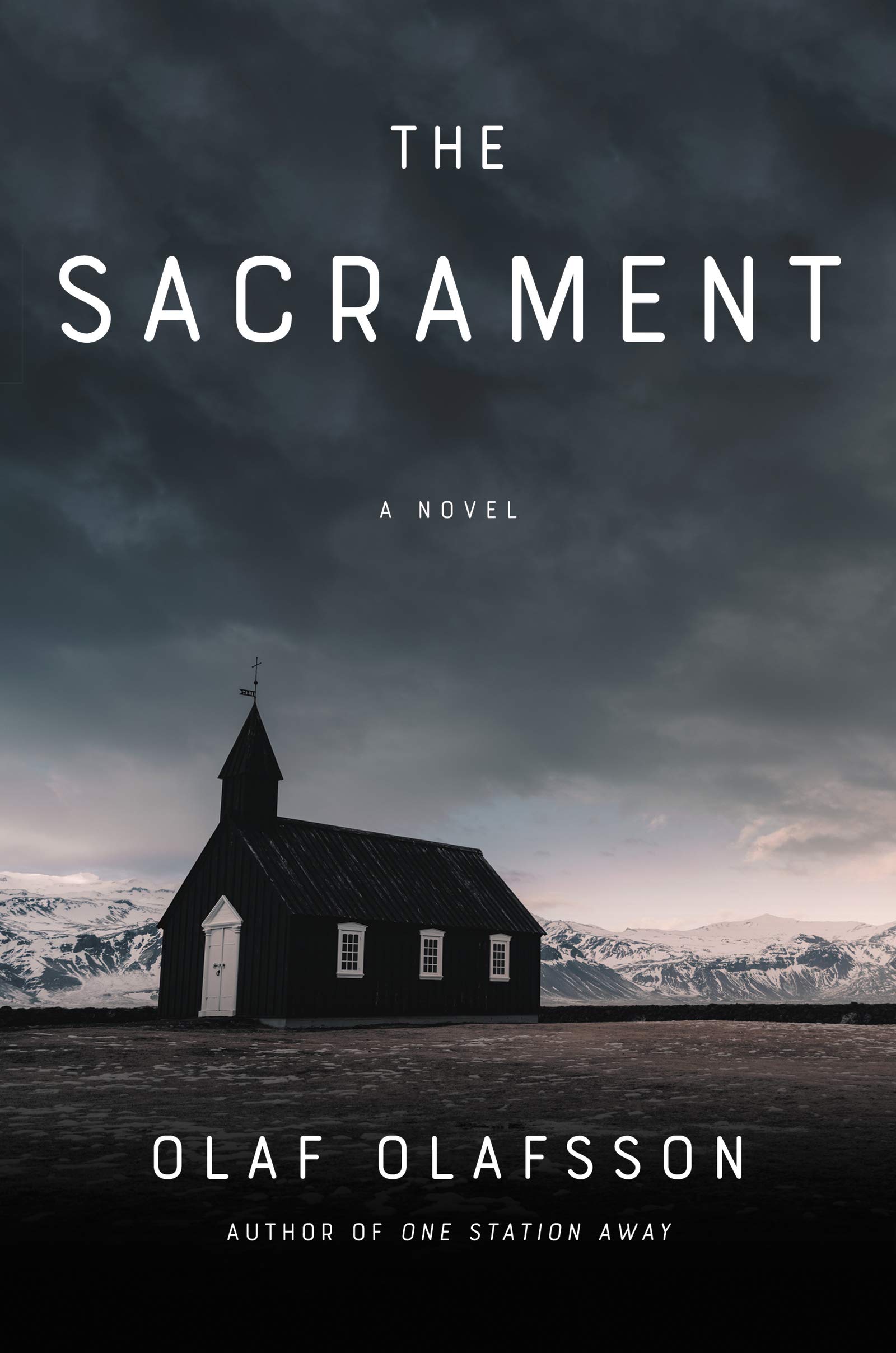
Image result for olafsson the sacrament

Self-Portrait

Image result for celia paul artist

I read all two hundred pages of Celia Paul’s autobiography on a recent flight from London to New York. Sunshine flooding into the cabin from the south was perfect for studying the extraordinary paintings that punctuate the story of her life.  It’s a story with a simple enough arc: from her childhood days in Kerala where her father was an Anglican missionary, to boarding school in Devon and her studies at The Slade, and onto her quiet career as an artist in London.

Love is the steady pulse of her story. Love for her parents and her four sisters, and for her son Frank, the child born from her relatively brief but intense relationship with Lucien Freud. And, most of all, love for painting, the work to which she has committed her life and of which she writes with such intensity and passion.

Reviews of Self-Portrait have tended inevitably to focus on the affair with Freud, which began when Paul was in her late teens. That’s a shame.  His often-shabby behavior, his neglect and infidelities, make for good headlines, but nothing should distract us from Paul’s outstanding work and the fervent commitment that has fueled it. She’s a wonderful painter and I hope this book will bring her the many new admirers she deserves.

Image result for celia paul paintings

The Pursuit of Art

Image result for jenny saville art

Martin Gayford is my kind of art critic. His work is serious, but never pretentious, arcane, or inaccessible.  He wants to share with readers his love of art and his admiration of artists. He believes not only that art changes us, but that we change art by how and where we encounter it.  As someone who has grown increasingly dissatisfied by the experience of visiting traditional galleries and museums, I found Gayford’s appetite for searching out art in unusual settings and out-of-the-way places infectious. I finished reading his “travels, encounters, and revelations” (the subtitle of this book) a little more informed about the likes of Gerhard Richter, Anselm Kiefer, and Gilbert & George, and a little more determined to seek out art in my travels.

This is the third book by Gayford I’ve read and it follows on from Modernists and Mavericks which I read earlier this year. I’m looking forward to the history of pictures he has co-written with David Hockney.

The River Capture

It’s nearly four years since I read Mary Costello’s first novel, Academy Street. It was a very striking and accomplished début and I recall thinking at the time how much I was looking forward to seeing how she would develop as a writer. Now comes The River Capture and more evidence of how skilled and sensitive a storyteller Costello is becoming.

The story is set in and around Ardboe House, a once grand but now faded home overlooking the fertile fields and ancient woods of County Waterford. Ardboe is the down-at-heel demesne of Luke O’Brien, an erstwhile schoolteacher taking a leave of absence from Belvedere College, the famous Jesuit school where James Joyce was once a pupil. Joyce is a continual presence and influence in Luke’s imagination; a hero, saint, and exemplar all at once.

Luke, living alone in the once-grand house, has memories instead of family, and literary heroes instead of friends. A solitary and lonely life that looks set to take root and become permanent is upended one day when a young woman knocks on the door …

The structure of the novel is peculiar. The first and longest section is a conventionally told story which then, for the final one hundred pages or so, shifts into a series of questions addressed to Luke (by the author? By Luke himself?). This move, itself a very Joycean conceit and reminiscent of parts of Ulysses, was a trick I found quite jarring and had the effect of distancing me from Luke’s emotional life, which itself had been so brilliantly rendered in the first half of the book. Deployed more briefly the change in style could have worked brilliantly, but the longer it was extended the more dissatisfying it became.

Leaving that to one side, I have a feeling this lyrical, sporadically brilliant, and flawed novel will stay in my mind for a long time.

Image result for mary costello the river capture