The Benefit of Hindsight

The tenth novel of the Serailler series by Susan Hill (and my second of the year) has arrived.  The previous one, which I read back in August, had been a disappointing dip in form, so I was hoping for something of a re-bound.
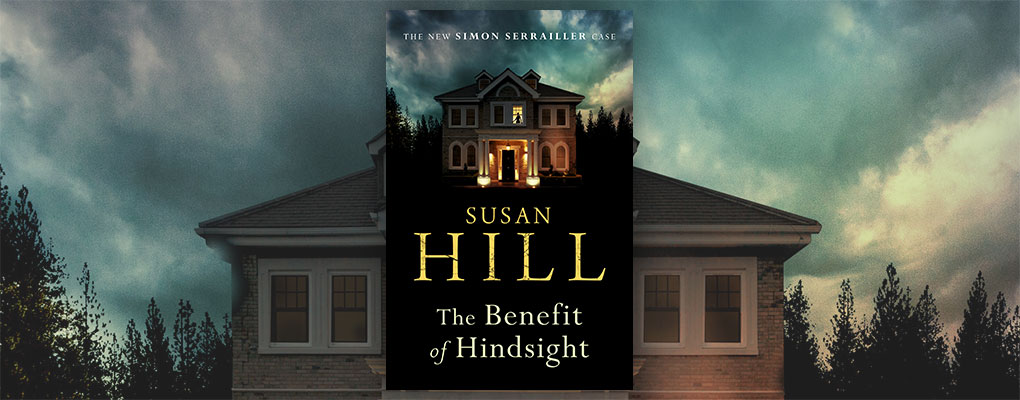
Image result for benefit of hindsight susan hill

This one is an oddity and I’m still puzzled by it. The novel comes to an end quite abruptly with the crimes at the center of the story unsolved and their perpetrators unidentified and unpunished. There’s also a completely extraneous plot line. It’s as if the author has lost interest in the mystery genre per se and is happiest focusing on the domestic life of Serailler and his family. Engrossing as that is, this series is now starting to feel unbalanced and to lose direction. Susan Hill is far too fine a writer to produce a bad novel, but she seems at a loss to know what to do with the series. These novels have many admirers, so it would be a shame to see them discontinued, but there’s a clear need for a re-boot.
 

The Past

Image result for tessa hadley the past

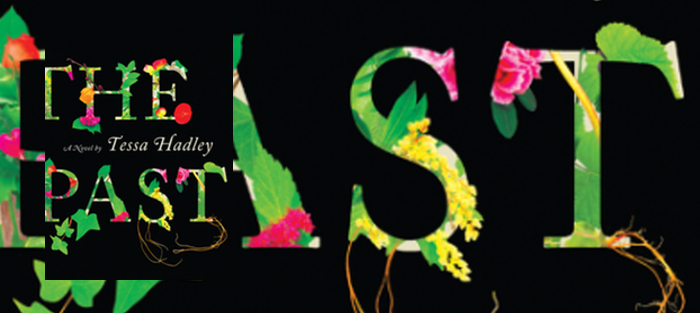
Tessa Hadley’s most recent novel, Late in the Day, made a big impression on me when I read it earlier this year, so much so that I knew I would want to track down and read her earlier books as soon as I could.  I found two, The Past and London Train, when browsing in Hatchards in St. Pancras and snapped them up.  Having just finished The Past, published first in 2015, I’m very happy to say it is at least as good as Late in the Day. It’s thrilling to discover not just an exceptional talent but a writer who does brilliantly all the things I want from a novel.

Four middle-age siblings come together for a three-week vacation in their grandparents’ dilapidated but much-loved house set deep in the English countryside.  Family meals, trips to the beach, and walks in the fields punctuate days in which intense emotions, rivalries, and tensions are the undercurrent.  The past is never absent. No one leaves unchanged.

I have a hunch that British readers might just get that little bit more from Hadley’s novels. There’s something quintessentially English about Hadley’s books and she’s certainly writing within what I think is a recognizable English tradition, joining the likes of Anita Brookner,  A.S. Byatt, and Margaret Drabble.  That is, by the way, very high praise indeed in my mind. Hadley’s is certainly not the type of fiction that appeals to everyone and at a superficial level there may seem something archaic about stories set in that milieu of the self-aware, slightly agonized English upper middle class. That shouldn’t deter anyone (from anywhere). Like all very good novelists, Hadley’s preoccupations are the things that should matter to all of us.

Inland

Téa Obreht’s latest novel is no easy read. Its lyrical, dense prose forced me to read carefully and slowly. I found myself able to concentrate only in short, intense bursts, after which I had to put it aside each time until I was ready to tackle it again.  Needless to say, it took me quite some time to complete. Was it worth the effort? Yes, I think so.

Inland is set in the Arizona Territory of 1893, a harsh, drought-choked place. The novel re-imagines the classic myth of the American West from two perspectives: the first a tough, haunted frontierswoman called Nora and the other an immigrant outlaw by the name of Lurie. Not a great deal happens.  This isn’t a novel you read for the plot, but what little plot there is serves as a necessary reminder of something that’s forgotten too easily and too frequently today: that America was crafted by a multitude of people born in every corner of the world, and by women just as much as by men.  America is as much an idea as it is a country. Obreht’s novel testifies powerfully to how the country was made from hard, unforgiving materials and the idea realized because of the sacrifices of tough and determined people, women and men whose descendants find themselves too often disparaged and overlooked today.

America is a place that tells and re-tells a small number of stories about itself constantly.  Those stories are what help to unite hundreds of millions of people who have little else to bond them.  Much of the time it doesn’t seem to matter whether the stories are true or not. That’s not the point; it’s the telling and re-telling that matters, the effect not the truth. The stories have been distorted by politicians since the country was founded. Stories and myths matter.  They have consequences. Obreht understands that.

Image result for tea obreht inland

Peggy Guggenheim

Image result for ordovas peggy guggenheim

Peggy Guggenheim began to exhibit her celebrated art collection to the public as early as 1951, but initially only on a seasonal basis.  It wasn’t until after she died in 1979 that her home in Venice, the Palazzo Venier dei Leoni, was opened full-time to visitors.  I hadn’t realized until very recently that she had tried on previous occasions to open galleries but with limited success.  A small exhibition currently in London at Ordovas tells the story of a gallery she opened in Cork Street, Guggenheim Jeune, in 1938.  The venture survived only eighteen months, closing in December 1939.  It’s easy enough to understand the reasons why it failed.  Art lovers in London had more pressing concerns in those early days of the war. It’s also possible that the artists that Guggenheim patronized and promoted in those days were simply too radical for the collectors of the time.  Cocteau, Brancusi, Calder, Schwitters and the like must have seemed shockingly avant-garde in the late 1930s.

The Ordovas exhibition in London displays some of the Guggenheim Jeune catalogs from the period alongside a small number of paintings and sculptures by two artists loved and exhibited by Peggy Guggenheim in those early days, Jean Arp and Yves Tanguy.  I’m no great admirer of either, but even eighty years on it’s hard not to be impressed by Guggenheim’s vision and courage.  She wasn’t daunted by the failure of the London gallery. She decamped first to Paris and then to the south of France, buying vast quantities of contemporary art with her inheritance.  Her purchases, works by Picasso, Matisse, Dali, Klee, Magritte and other modern masters, became the core of the collection that eventually opened decades later in Venice and the permanent monument to an extraordinary collector and patron.