
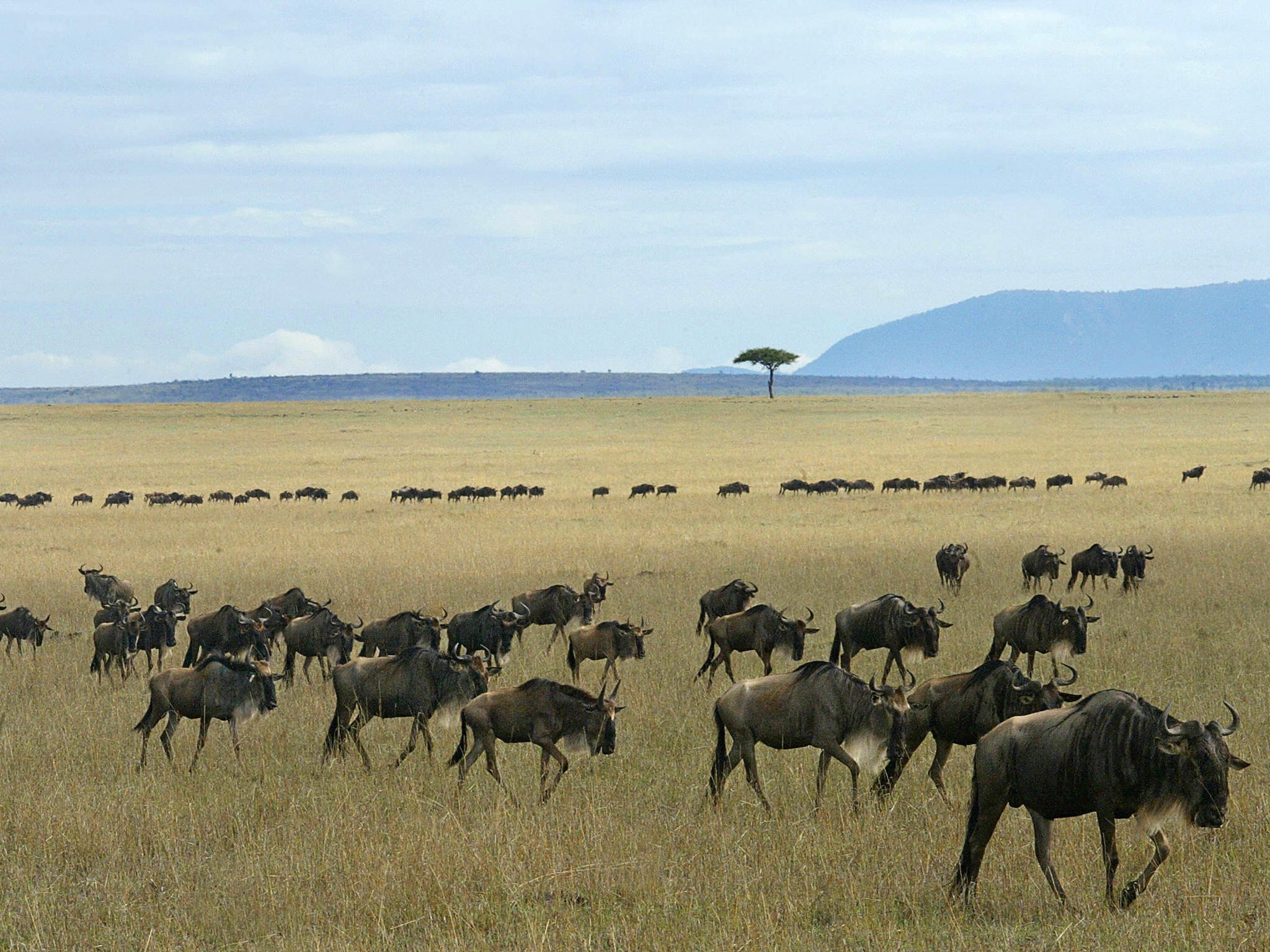
The term safari derives from the Kiswahili word for journey or expedition. In recent years “going on safari” has become a slightly pretentious way of talking about something that for most tourists means little more than staring at and photographing wild animals from the comfort of an air-conditioned 4×4 or minivan. Safari is big business and a key money spinner for countries such as Kenya, Tanzania, Botswana, and South Africa. Go in high season to the Serengeti and the Okavango Delta and you’ll see traffic jams as well as wildlife. Like so many forms of mass tourism, safari is something of a mixed blessing. On the one hand its economic importance has led governments to clamp down on poachers and that’s helped protect some endangered species. On the other side, hundreds of thousands of visitors in tens of thousands of vehicles have inflicted significant damage on wild habitats.
The Masaai Mara is one of the most popular safari destinations. A thousand square miles of savannah grasslands dotted with acacia trees and with blue-tinted mountains on the horizon, it’s home to one of the Earth’s richest concentrations of wildlife. It’s a place of singular, wild beauty and environmental significance, a place that inspires and intimidates. I went a few times in the mid-1980s when tourism in Kenya was still relatively undeveloped, setting up camp with a few friends and guided and protected by local Maasai tribesmen for a little money. It’s a very different place today. Dozens of lodges give accommodation to large numbers of visitors, especially in the high season, and scores of vehicles shoot around its roads and tracks looking for elephants, lions, leopards, rhinos and giraffes. The experience can feel more than a little preposterous. And yet there’s real magic to be found. On a recent visit in the low season, I watched a hunting party of five cheetahs stalking their early morning prey, walked along the bank of the Mara river and saw crocodiles and hippos feasting on the carcasses of wildebeests who had drowned during the recent migration from Tanzania, and sat under an acacia tree watched by curious baboons. And throughout those precious few days I felt so privileged to be in a place of such dramatic, extravagant beauty and to get close to so many wonderful creatures.
Perhaps I did a little good in those days. Contributing a little to an impoverished economy and adding myself to the crowd of visitors that reminds the Kenyan government that these precious places and animals need protection and conservation. But maybe I did a little damage also. Damage to those vulnerable habitats and damage with my carbon footprint. Something to think about as I remember time spent in one of the most beautiful places in the world




 Miscellaneous Musings