King Lear

A new staging of King Lear will open on Broadway shortly.  I saw a preview performance a few days ago.  Productions of this vast, intimidating classic aren’t particularly rare, so why is this new opening causing such a stir?  Partly because one of the greatest actors in modern times is taking on the leading role.  And that’s where things start to get interesting because this actor is a woman and that woman is Glenda Jackson.

I’m no theatre critic.  The cast was uneven and there’s no disguising the fact that King Lear, for all its magnificence and power, is a baggy and unwieldy monster to stage.  But Jackson’s performance was peerless; among the best I’ve ever seen.  Small, wiry, and appropriately ancient, she commands every inch of the stage and every second of the four hours she’s performing.  And not for a single one of those seconds does it seem strange that a woman should be playing the role of Lear.

Image result for glenda jackson king lear nyc

A Month in the Country

It’s the summer of 1920 and Tom Birkin, still recovering from the horrors of the Great War and an unhappy marriage, arrives in a small village in the Yorkshire countryside to begin the work of uncovering a medieval wall painting in the local church. Over the course of one summer month, Birkin works hidden from sight on his scaffold, bringing into view inch by inch a masterpiece hidden for centuries. A stranger in a small, tightly knit community, he gradually finds acceptance and begins the process of recovering from brutality and sadness.

Image result for carr a month in the country

First published in 1980, the novel was shortlisted for the Booker Prize and later adapted as a film. I read it as a student when it first appeared and I was curious to see if I would enjoy it as much the second time around.  Beautiful and truthful, it’s a work of perfection, capturing brilliantly the melancholy of later life like the hint of autumn in a late summer’s day.

Territory of Light

Image result for yuko tsushima

It was my local independent bookseller who recommended I read Territory of Light. She knows of my interest in Japan and we’d been talking about Murakami’s novels when she pointed out Yuko Tsushima’s story.  It was initially published in 1979 in twelve monthly installments in a Japanese literary magazine and now appears in a new translation by Geraldine Harcourt.

The short novel is narrated by a young woman who, when her husband walks out, is forced to raise her young daughter alone in Tokyo.  They move to a tiny, light-filled apartment above a shop to begin their new life.  There’s nothing rose-tinted here about the experience. The young mother drinks too much, yells at her daughter, and generally struggles to stop her life unraveling, but somewhere in the telling of this story something heroic emerges from the mundane details of an ordinary life.  Not much happens but there’s truth in the little that does.

Don McCullin (Tate Britain)

Some of the pictures that Don McCullin took in war zones around the world are among the most well-known images of the 20th century.  Who can forget the shell shocked marine in Vietnam, the starving albino child in Biafra, or the grieving widows from the Cyprus civil war?  However familiar those pictures are, fifty years on they have lost none of their power to shock.  Walking around Tate Britain recently, it was deeply moving to see how the crowds of visitors were stunned into total silence by the war photographs. It seemed obvious that many of the visitors, especially the younger ones, had little or no experience of McCullin’s work, and the effect on many of them was clearly profound.  The galleries dedicated to his work in Congo, Vietnam, Cambodia, Nigeria, Northern Ireland, and elsewhere were eerily silent as people gathered around the images, immersed in a suffering most of us will never experience directly.  McCullin’s vocation has been to connect the rest of us to the horrors of the last fifty years, creating a heroic, truthful, and ultimately beautiful body of work that stands as remembrance, testimony, and indictment.

Image result for mccullin tate britain

The Helmet Heads

Image result for helmet heads wallace collection

Henry Moore was a regular visitor to The Wallace Collection as a young art student in the 1920s and continued to find inspiration in its exquisite holdings of armour throughout his career. It’s clear in particular that the London museum’s beautiful Italian and German helmets from the 14th, 15th, and 16th centuries moved him deeply and were the stimulus to produce the series of Helmet Heads he made between the early 1950s and mid 1970s. For the first and probably the only time, Moore’s work and the armour that inspired it have been exhibited side by side in the museum that clearly captivated him as a young sculptor.

Moore served in the First World War and knew all about the protective qualities of military helmets.  As he developed as an artist he became increasingly interested in the idea of the human head as a protective case for the psyche, strong but vulnerable, an image he appropriated later in his career in the work he did to support political causes such as the Campaign for Nuclear Disarmament.

This exhibition at The Wallace Collection juxtaposed Moore’s drawings, paintings, maquettes, and models alongside all the finished Helmet Heads and the ancient armour that inspired them.  In doing so, it not only illustrated one of Moore’s lifelong interests and themes, but also the extraordinary beauty of the work that made him perhaps the greatest sculptor of the 20th century.

Whitstable

England’s seaside towns have been in steady decline for what feels like decades but it has been interesting to see how some of them in recent years have reinvented themselves and revived their economies as centers of art and gastronomy. One of the most successful in this respect has been Whitstable.  Situated just a few miles from the ancient city of Canterbury, Whitstable started to prosper as a tourist destination for Londoners in the mid-18th century.

Image result for wheelers whitstable

Today, the town attracts visitors from far and wide drawn to its outstanding seafood restaurants, pretty shops and pubs, and the long shingle beach.  The day we visited recently was a wild and blustery one, the kind of day when staying upright on the beach was a challenge for everyone.  It wasn’t too hard to be persuaded to take refuge in Wheeler’s Oyster Bar, a small place that opened first in the mid-1850s and has been serving outstanding fish and seafood ever since.  Wild Whitstable oysters (famous throughout the UK), halibut, spicy crab cakes and homemade bread with Guinness-flavored butter were served at the tiny counter and it was fun to watch people coming in to buy fresh crab and prawns at a place that’s clearly loved by locals and visitors alike. If this is typical of what Whitstable has to offer, I can’t wait to visit again on a calmer day, perhaps during the summer oyster festival.


Late in the Day

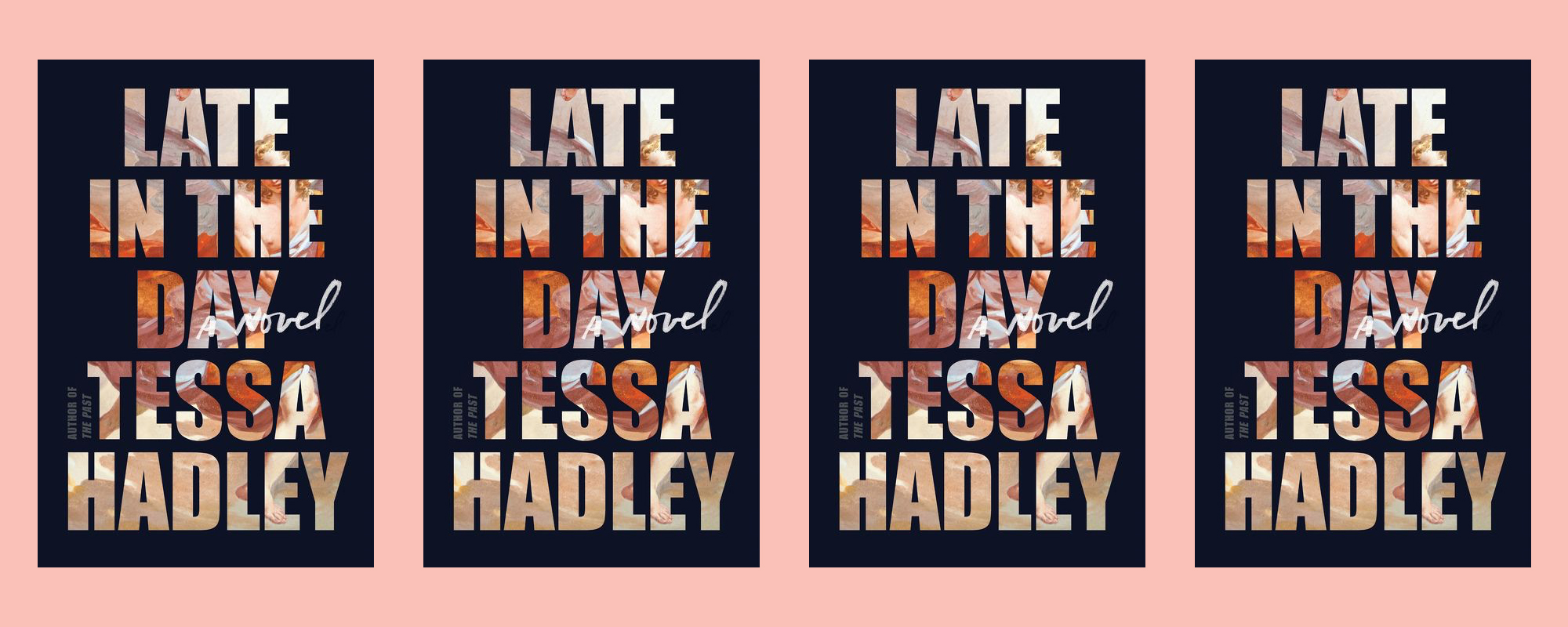
I loved every word of this beautiful, sensitive, and quietly disruptive novel. I read the first hundred pages or so before putting it aside for two weeks.  Coming back to it, I remembered reading those early pages slowly and carefully and finding myself being drawn in by the power of both the story and the storytelling.  The temptation to gulp down the book quickly and greedily was something I wanted to resist. I knew the rest of the novel deserved the attentiveness I’d given to the early pages and intuited that I’d get more if I took a break and returned to it later for an equally careful reading.

On its flawless surface, Late in the Day seems to be one of those quintessentially English novels in which intelligent, cultured, and affluent people (people of “bourgeois sensibility with their sadness and subtlety and complicated arrangements“) are captured in a moment of sudden and private grief, a moment in which the complex, densely packed and strong-yet-fragile root structure of their relationships is exposed to view.  It also seems to be, again only on the surface, an old-fashioned story, one in which an omniscient narrator stands detached, peering into the lives of the characters she has created, and understanding better than they themselves their motives and destinies.

The novel opens with the sudden death of Zachary, a London-based gallery owner. For his wife, Lydia, his best friend, Alex, and Alex’s wife, Christine, all close friends for decades, the death has the force of an earthquake and aftershocks that will reverberate for a long time.

Tessa Hadley has, I believe, been publishing novels since 2002 but it’s only now that I’ve discovered her books, and come to realize how admired she is, and how much she deserves the admiration.  Late in the day indeed, but better late than never.

Image result for tessa hadley late in the day

They Shall Not Grow Old

Image result for they shall not grow old

If you have seen any of the black and white archival film footage from the First World War, you will most likely remember grainy, shaky, juddering images of soldiers on the Western front.  The original film stock, itself of poor quality, has deteriorated further in the hundred years since the end of the war. When the Imperial War Museum in London was looking for ways to mark the centenary of the Armistice and approached Peter Jackson, the Oscar-winning director of The Lord of The Rings, Jackson saw an opportunity.  Could 21st century technology and editing techniques rescue the ageing celluloid and create a fitting and permanent monument to the hundreds of thousands of men who gave their lives in “the war to end all wars”.

The result is simply extraordinary.  Jackson and his team took the museum’s hundreds of hours of film and its enormous collection of audio reminiscences and created a 100-minute documentary that is simply a work of art.  And, in a move that could have flopped horribly but which triumphs completely, Jackson took the decision to colorize the original black and white film.  The technology of colorization has clearly come a long way because the results presented here, though not consistently perfect, feel natural and authentic.

Film and technology geeks will love what was achieved here and will be delighted by the 30-minute appendix to the documentary in which Jackson describes how the work was done.  But what really matters is the recovery of those faces and voices from a hundred years ago, the faces and voices of the resilient, the brave, the frightened, and the dutiful. The restoration forever of the lives extinguished and the voices silenced, some just a few hours after the original films were first recorded.