
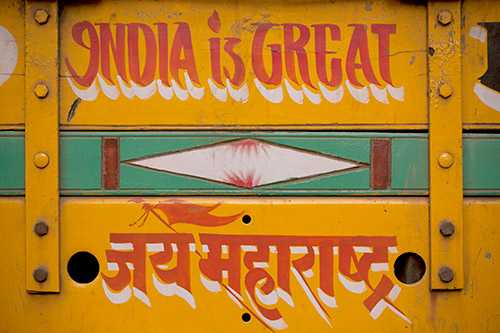
There’s a lot of pride in India these days. Sit in a highway traffic jam for a little while and you’ll see trucks all around you, elaborately decorated and brightly colored, with the words Great India stenciled in large letters on their paintwork. Signs from the tourist authority hanging down from bridges and lamp posts remind locals and visitors alike that they are in Incredible India. Confidence is everywhere.
It was all very different back in 1979 when I visited for the first time. India, vibrant and colorful though it seemed to me then, felt like a country overwhelmed by its own problems. Forty years on, much has changed, especially in the cities, and India has become a global super power. But whenever I travel there with colleagues and friends seeing India for the first time, they’re shocked by the crumbling infrastructure, the chaotic traffic, the cows and stray dogs wandering in the city streets, the mounds of rubbish, and I realize that India’s progress, though extraordinary, isn’t always visible in the ways foreigners expect it to be. In spite of its phenomenal development in recent decades, it remains a country with profound challenges to overcome: poverty, inequality, and illiteracy, all the more shocking because of the extraordinary advances visible in other areas of Indian society. India does everything – even advancement – in its own unique way.
I’ve been lucky enough to return to India many, many times since that first visit four decades ago. It’s a country I’ve grown to love and it’s one that fascinates and moves me perhaps more than any other. It has a unique energy and culture and a deep, unaffected spirituality. I have found in its people gracefulness, kindness, and hospitality in extraordinary measure. It’s a place that every day makes you challenge your expectations and question your assumptions and, above all, reminds you that there’s no single pattern for living. India is incredible, indeed.
 Miscellaneous Musings