Paris Echo

Image result for paris echo sebastian faulks

London is one of those ancient cities where history seems to intrude at every turn, a place where the membrane between the past and the present seems thin and permeable.  Just take a walk along one of its rivers or canals or wander the streets in almost any neighborhood and you’ll feel the presence of past generations.  Walking in London means walking a few feet above hidden graveyards and buried rivers, past the homes of the famous and the unremembered.  Preservation – always so important to Londoners – is about more than protecting precious buildings and writers like Iain Sinclair, Gillian Tindall, and Peter Ackroyd have taught us brilliantly that the past is never fully past in a great city.  All we have to do is look and listen carefully to see the glimpses and hear the echos everywhere.  T.S. Eliot expressed this perfectly in The Four Quartets

Time past and time future
What might have been and what has been
Point to one end, which is always present.

What I feel about London, Sebastian Faulks feels about Paris.  History in a city is “what gives depth to a day.  It’s the silver behind the glass.  Otherwise, life would be like being permanently on the Internet.  Click. Open. Shut. Click.” Hannah, an American historian, is in Paris to study the lives of women during the Nazi occupation, reading transcripts and interviewing survivors.  Her personal past – a bad relationship in Paris several years previously – presses on the present.  Tariq, a young, poor, and illegal immigrant from North Africa, explores a different Paris, its deprived banlieues, far from the tourist sites, in search of traces of the mother he barely knew.  Their individual and shared odysseys see them crisscrossing multiple versions of Paris – ancient and modern, rich and poor, yesterday’s and today’s – its streets and its Métro.  At every turn, images and voices from the past press against and poke through the thin veil separating Hannah and Tariq from the Paris of the 1940s.

But what’s our responsibility to the past?  Do we have a duty to remember?  Or does remembering prevent us living fully in the present?  How much history do you really need to know and is forgetting inevitable?  A Polish writer called Wislawa Szymborska understood this.  Those who knew/what was going on here/must make way for/those who know little./And less than little./And finally as little as nothing./In the grass that has overgrown/causes and effects/someone must be stretched out/blade of grass in his mouth/gazing at the clouds.

Antony and Cleopatra

Bad news for the young.  Some things are best and most fully enjoyed when one is older.  In fact, let’s go one step further.  Age and experience are essential to appreciate some things.  Malt whisky, for example, and certain Shakespeare plays like King Lear and (one of my favorites) Antony and Cleopatra.  I first read the great Roman play nearly forty years ago but had never seen a production until recently when I headed to The National Theatre in London to watch Ralph Fiennes and Sophie Okenedo take the lead roles.  What a gorgeous piece of work it is, filled with the most beautiful language and poetry, some of which I was surprised to find lodged in my memory since those days at university.

Image result for antony and cleopatra

I was a little disappointed by some aspects of the production.  The modern dress staging had a cold, corporate feel to it that blunted the sumptuousness of language and imagery for which the play is famous, and Ms. Okenedo’s Cleopatra could have used a little more grandeur and majesty for my taste.  No matter; this isn’t a theatre review.

Antony and Cleopatra was probably first performed in 1607, part of that extraordinary burst in creativity later in Shakespeare’s life that gave us King Lear, Macbeth, and The Tempest.  The plays of that period are all to some extent meditations on ageing and the conflicts that come with it, the days of waning powers and the realizations that accompany those days.  It’s worth remembering that Shakespeare was in his early forties in 1607, a time when average life expectancy in England was about 35 years, so it’s not surprising his thoughts would have been focused on old age and mortality.  And what a clear eye he had when it came to understanding the transience of power, the fickleness of achievements, careers, and reputations:

Kingdoms are clay; our dungy earth alike
Feeds beast as man. The nobleness of life
Is to do thus; when such a mutual pair
And such a twain can do ‘t, in which I bind,
On pain of punishment, the world to weet
We stand up peerless.

And, yes, it’s difficult to understand that when you’re young.

Now We Shall Be Entirely Free

Image result for andrew miller now we shall be entirely free

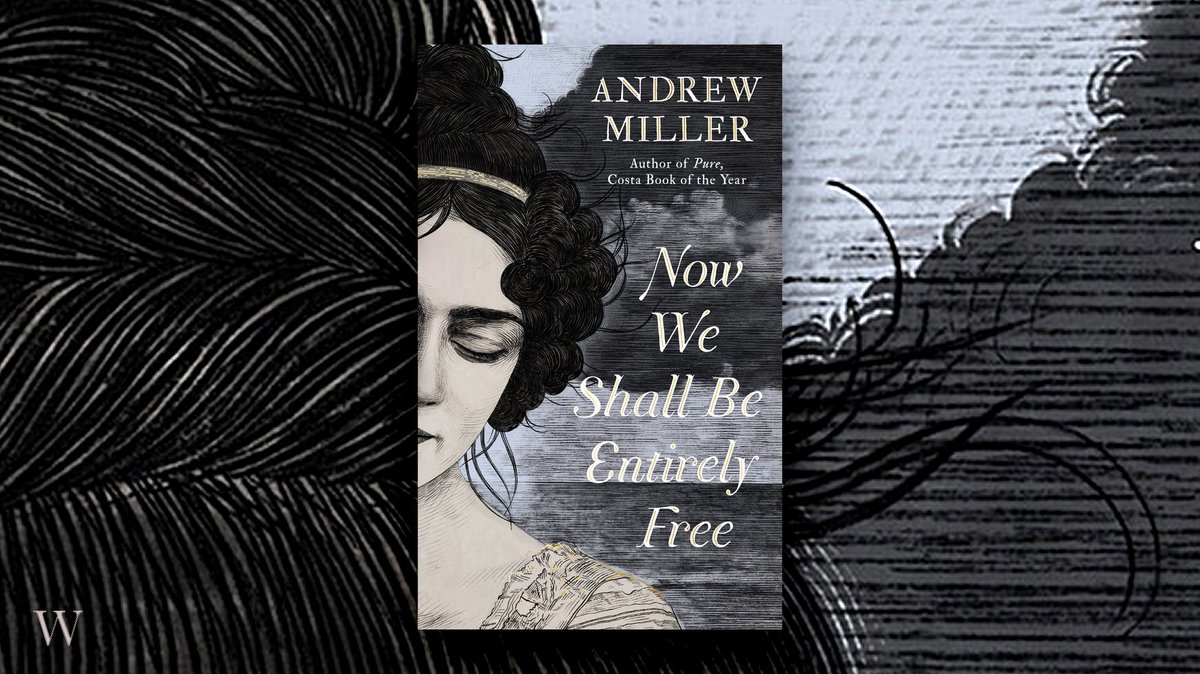
It was only after I started Andrew Miller’s new novel, set at the time of the Napoleonic Wars, that I realized how little historical fiction I read.  I’m not sure why that is.  Great stories can be set in any context, so there must be some reason why I avoid “period novels”.  In some cases it’s no more complex than being unable to relate to the setting in any meaningful way and that inability impeding my enjoyment. Ishiguro’s last book, The Buried Giant, set in the Dark Ages and a world of ogres, was a perfect example of this.  I enjoyed it less because I couldn’t imagine myself into the setting.

I discovered Now We Shall Be Entirely Free while waiting to see a friend at the publisher’s office.  The opening pages – brilliantly written and as seductive as any detective story – gripped me right away and I had to find out more about the mysterious, sick, and damaged soldier returning home to England from Spain in 1809.  The rest of the novel – part love story, part thriller – lived up to that wonderful first chapter.  Miller writes beautifully, with every word and phrase chosen and weighted with the care of a poet.  That alone would make me recommend this novel, but it’s also a surprisingly topical and resonant book about the cruel injuries of war, the enduring trauma of violence, and the curative powers of love.

A Town Like Alice

Image result for a town like alice

How do you select the books you read? For me, reviews certainly influence what I buy, especially those in the weekend edition of the Financial Times or Sunday’s New York Times.  Advertisements on bookselling websites have no sway whatsoever and I’m almost allergic to the clumsy “if you liked this, you’ll love this” trick that the likes of Amazon.com seem to think is so clever and influential.  Serendipity plays an occasional part, as does the guidance of friends, many of whom are voracious readers.  Their tastes and mine don’t seem to overlap very much but I’m always keen to hear what they recommend.  When one of those friends gave me A Town Like Alice for my birthday and said it was one of her all-time favorites, I was intrigued to read it.  Other than a vague awareness of it and its author, Nevil Shute, I knew nothing.

I can see now why my friend thinks so highly of it. The story it tells is a powerful one and its impact is all the greater because Shute’s style is so readable.  In some respects it’s clearly a product of the late 1940s, not least in its uncomfortable descriptions of the Japanese in Malaya during the Second World War and of the Australian aborigines in the years immediately after. But it’s far more than a quaint and entertaining period piece.  The character of Jean Paget, moving as she does from the drudgery of wartime London to the cruelties of detention in occupied Malaya and then to the Australian outback in the years after the conflict, is an extraordinary precursor of the strong, independent women everyone takes for granted in fiction today.