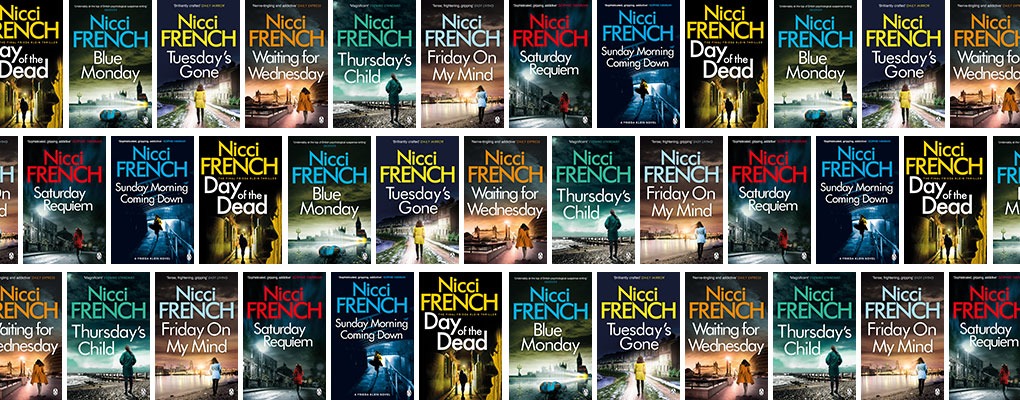
Day of the Dead

Day of the Dead is the eighth and final installment in the series of crime novels featuring the psychotherapist Frieda Klein and her would-be nemesis Dean Reeve.  By now it’s familiar fare: an implausible story line redeemed by likeable characters and driven by slick, cleverly plotted storytelling.  Frieda and Dean, having played cat-and-mouse over eight novels, are heading towards their inevitable final confrontation, the path to which is littered with more bloody corpses than London would normally expect to see in a year.  Fear not: I won’t spoil the fun by revealing the dénouement.  I’m going to miss this series, which I’ve been reading for several years.  It will be interesting to see where husband-and-wife team Nicci Gerard and Sean French go next.

Image result for day of the dead nicci french

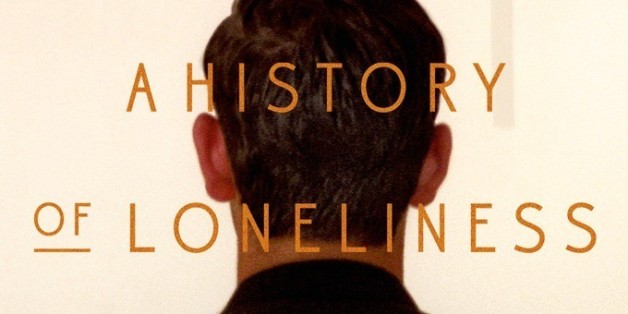
A History of Loneliness

Image result for boyne history of loneliness

The abuse of children over many decades by Roman Catholic clergy was made possible by many things but the silent complicity of otherwise blameless priests, who knew what their colleagues were doing but failed to report it, was key to its persistence.  John Boyne’s novel, set in Ireland, has as its central character one such witness, Father Odran Yates.  His crime isn’t the appalling cruelty practiced so relentlessly by other priests or the explicit covering-up by the bishops and cardinals of his church.  His sins are hubris and selfishness.  His self-regard, bolstered by the reverence accorded to priests over centuries, makes true connections with others impossible.  Yates can’t see this, nor what’s unfolding under his slightly upturned nose.  Of course, he has his own scars.  His father drowns one of his sons and then takes his own life.  His mother, embittered by this tragedy and her disappointing marriage, centers all her cloying affection and ambition on her remaining son.  Fr. Yates, preoccupied with his own clerical career and haunted by a sad and trivial infatuation with a waitress, sees the signs of persistent abuse in his colleague and friend but fails to act until the devastation is uncovered by others and the evidence is irrefutable.

Boyne’s novel isn’t perfect.  The interludes in Rome and Norway, for example, are unconvincing and clumsy.  Nevertheless, this is a haunting book.  Not for what it uncovers about the cruelty of the abusers or the suffering of the victims; nothing could be more shocking than the official accounts of what happened in those decades.  What lingers after closing A History of Loneliness is the tragic confirmation, if confirmation were needed, that the only thing necessary for the triumph of evil is that good people do nothing.

Packing My Library

Image result for personal library

For bibliophiles like me, it’s the stuff of nightmares.  Moving from a spacious farmhouse in the Loire Valley to a one-bedroom apartment in Manhattan sounds horrible enough, but on top of that having to pack a personal library of more than 30,000 books, deciding which to discard, which to store, and which to retain? Hideous.  That was the task faced by  Alberto Manguel and recounted with insight, humor, and elegance in his memoir, Packing My Library.  Señor Manguel, a distinguished critic, translator, library director and writer, thinks of himself primarily as a reader and book-lover, and what a sensitive and subtle one he is, gently teasing apart the tightly connected strands of possessiveness, obsessiveness, curiosity, commitment, and awe that bind all book lovers to their libraries.  A shelf in my own library is devoted to books about books and Packing My Library has now taken its place there alongside favorites by Diana Athill, Gabriel Zaid and others.

The book’s subtitle is “An elegy and ten digressions“.  It’s hard to miss the quality of pensiveness and sorrow that infuses the memoir, as if the act of boxing his precious library awoke an existential sadness, provoking melancholic reflections on creativity, collecting, solitude, faith, and much more.  Not that this is a humorless memoir.  Quite the opposite, in fact, but it’s serious, as all important books must be, and it gives appropriate place to the sorrow that’s inescapable in every life. The separation from his beloved library foreshadows the bigger letting-go that faces every one of us.

Commitment

We were about fifteen minutes into the performance of Red, John Logan’s award-winning play about Mark Rothko, when the theater’s fire alarm went off.  With the sangfroid and perfect timing you’d expect from a great actor, Alfred Molina turned to the audience and said “We never rehearsed this”.  This being London, we all filed out of the building good humoredly and politely, returning unharmed to our seats after a half hour or so for the re-started production. It’s an extraordinary, multi-layered play about many things, but mostly, I think, about Rothko’s fierce, unyielding, uncompromising commitment to his vision of art and life.

During the enforced intermission I got talking to a stranger who’d sat next to me in the theater.  A human rights worker from Mexico City, she was devoting her life to protecting the interests of the poor in places such as Guatemala and Honduras from unscrupulous corporations and corrupt governments who take their lands, livelihoods, and liberties without the slightest thought of the consequences. We continued the conversation over drinks after the wonderful show.  What impressed me as she talked – about injustice, precarious funding, and the petty rivalries of NGOs – was her total certainty about the trajectory of her professional life and the deep sense of mission driving her forward.  Hers was no job, no career, but a vocation propelled by a bright determination to fix something broken in dark places unknown and unimportant to almost everyone.  Vocations tend to cost something and hers certainly had in her personal life, but she’d paid the price happily because nothing else really mattered other than doing something, however small, for those unable to protect themselves.  Something small, but something still larger than herself.

Rothko would have understood.

Image result for rothko red