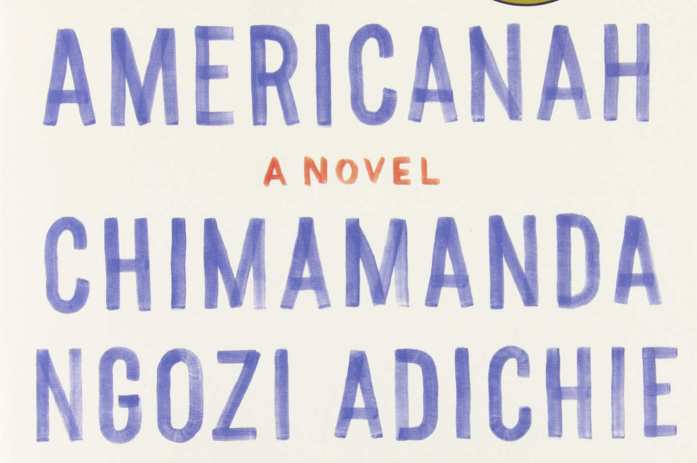
Americanah

I went to Lagos in 2013 to speak at a conference, my only visit so far to Nigeria.  Friends and colleagues with experience of the country were keen to warn me of the dangers and filled my head with horror stories of lawlessness and chaos.  The trip was uneventful but I’ve often thought how I allowed others to influence my experience of the country.  I arrived in Lagos with a single story in my head, a story absurdly incomplete and prejudiced, but powerful enough to constrain what I saw and what I experienced.  Chimamanda Ngozi Adichie has spoken beautifully about “single stories” and how they twist our thinking about others.  Listen to her TED Talk here (if you haven’t already) and be amazed.
16-americanah.w710.h473.2x

Her much-praised novel, Americanah, also amazes.  It tells the story of Ifemelu, a young and gifted Nigerian woman, who heads to America and becomes a Princeton scholar and celebrity blogger about race.  The plot of the novel centers on her decision to return to Nigeria, but its heart is the prolonged reflection on life as a black African woman in contemporary America.  It’s an unusual achievement: often charming and funny, but filled with sharp insights.  At nearly 600 pages, it’s undeniably over-long and could have been shortened without any loss to its overall power, but it’s a feat of wonderful storytelling and marks the arrival of an important new voice in fiction.

The Gifts of Reading

Coincidences, whether they amaze, unsettle, or delight, can have extraordinary power.  Some of that power, it seems to me, comes from the messages they deliver or the influences they can have on our thoughts, feelings, and actions.

I’m interested in what friends and acquaintances read.  I recently stayed in England with some old and dear friends I hadn’t seen for several years.  Jet lag woke me earlier than usual, so I used a little of the time before breakfast to browse their bookshelves for inspiration.  My friends, both keen walkers and lovers of remote places, had several books by an author previously unknown to me, Robert Macfarlane.  As I flicked through the pages of his books, reading occasional passages, Macfarlane’s voice spoke clearly and loudly in the quiet of the pre-dawn of his love for landscape, language, and the connections between both.  I made a note of the titles, planning to buy copies on my return home.

Image result for robert macfarlane the gifts of reading

A day or two later I traveled to London and went to an exhibition at the British Museum I had been intending to see for several weeks about a writer whose books I love, Patrick Leigh Fermor, and his friendship with two painters, John Craxton and Niko Ghika.  The thrilling exhibition celebrated their friendships, their shared love of the Hellenic world, and the influence of both on their writings and paintings.  I recall leaving the museum and walking into the chill and winter greyness of London and feeling the warmth and brightness of Crete, Hydra, and the Mani still warming me.  I walked a mile or so to Hatchards in Piccadilly, planning to browse the new releases and to look for a gift to send to my friends to thank them for their hospitality.  There, face up on a table, were copies of a tiny book by Macfarlane called The Gifts of Reading.  Without opening it, I bought a couple of copies, one for myself and one for my friends, pleased with the coincidence.  It was only a week later, flying back to New York, that I read the book and discovered that it’s partly about Patrick Leigh Fermor.

It felt like the completion of a circle.  The discovery of a new writer in my friends’ house, the lovely exhibition, the serendipitous appearance of Macfarlane’s book on a Hatchards’ tabletop, and its celebration of the author featured in the exhibition.  The Gifts of Reading is an exquisite miniature, a tiny meditation on friendship, generosity, and the power of books, and for me a reminder of my extraordinary good fortune.