
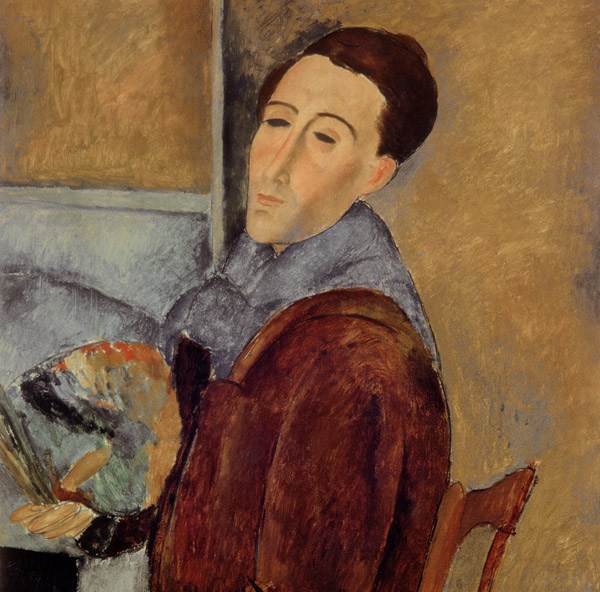
Modigliani, much like Chagall, has taken something of a critical beating in recent years. Once revered as one of the great figures of Modernism, he seems to have been thoroughly re-appraised by critics and found to be wanting. Too narrow in his range, a clumsy borrower from the greater figures who surrounded him in Paris in the early years of the 20th century: so go the critical complaints. The recent show at Tate Modern, the largest retrospective ever put together in the UK, can be seen as an effort to start the reversal of that trend. Not that the effort is needed, if the horde of visitors on the day I was there is any indication.
The centerpiece of this show is a room filled with those extraordinary, languorous nudes (so shocking when first exhibited), but it’s the other portraits, of friends, lovers, and strangers, that really captivate. Yes, the style is remarkably uniform and seems to have been modified little in his short working life, but the richness of color and the emotional impact are hard to deny.
It’s fun to speculate what direction Modigliani, dead at 35, might have taken if his career as a painter had been longer. So distinctive was his style of portraiture – those mask-like faces, impossibly long necks, and black eyes – that it’s difficult to imagine that he might have evolved. Kudos to the Tate for this lovely show, but can we now please see the sculptures?
 Miscellaneous Musings