Notes On A Foreign Country

“I have always been struck, in America, by an emotional poverty so bottomless, and a terror of human life, of human touch, so deep, that virtually no American appears able to achieve any viable, organic connection between his public stance and his private life”.  James Baldwin.

In 2007, Suzy Hansen, a young journalist based in New York, won a writing scholarship that sends Americans to live overseas for up to two years.  She elected to move to Turkey.  She landed in Istanbul, wholly ignorant not only of the history of the Middle East but also of her own country.  Ten years on, with occasional side-trips to places such as Greece, Egypt, and Afghanistan, she’s still in Turkey.  Notes on a Foreign Country is the account of her journey.

The “foreign country” she discovers is America.  With her immersion into the politics, history, and culture of her adopted home comes a deeper, clearer, more truthful understanding of the place she was born.  Just as it has for so many expatriates (she writes very well about James Baldwin, for example), distance brings Hansen clarity and wisdom.
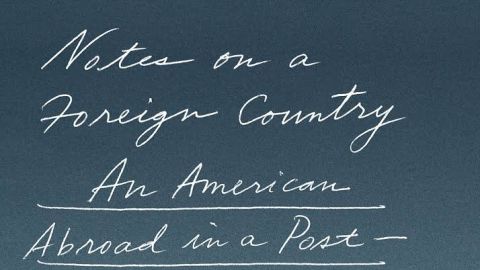
notesonaforeigncountry-480x270

Her exploration of Turkey becomes an exploration of America’s impact on that country and its people, and that in turn leads to her discovery of America’s terrible colonial legacy and its ruinous, devastating consequences for hundreds of millions of ordinary people in places such as Egypt, Greece, Iran, Vietnam, Cambodia, Nicaragua, Chile, Argentina, Cuba, Iraq, El Salvador, and many more.  It’s a very different story from the one usually told by America to Americans.

This is a truly significant book.  It matters.  It ought to be required reading for anyone who wants to understand why so much of the world is hostile to America.  I defy anyone, even those who consider themselves knowledgeable about America and its foreign policy since the beginning of the 20th century, to finish the book and claim their world-view hasn’t changed in some measure.

Storm King

We couldn’t have had a more perfect day for our first visit to Storm King.  The trees were alight with autumn color – yellow, gold, and red – and set against a cloudless blue sky.  We took advice and arrived before the crowds.  We followed a vague path, seeking out the work of familiar British sculptors first: Henry Moore, Barbara Hepworth, and Anthony Caro, then others we knew such as Richard Serra.  What mattered was being outside in the glorious fall colors, enjoying not just the artworks but the beautifully sculpted grounds with long grasses, trimmed meadows, and those stunning trees.

A4yspFyCUAA2zCP

The Golden House

10-Covers-low_670There was a time – the early part of his writing career – when I waited eagerly for every new novel by Salman Rushdie.  Midnight’s Children, Shame, The Satanic Verses: these were the books I recommended to all my friends in the 1980s.  I loved the exuberance, energy, and inventiveness of those early novels.  Then something happened.  I stopped loving Rushdie’s books.  I was reluctant to admit it at first, so I persevered.  It felt more and more like hard work. I found them too self-regarding, too self-conscious, too showy.  I couldn’t see what he was trying to do with all that brilliance.

With The Golden House, I feel to some extent that “my” Salman Rushdie is back.  The brilliance and “look at me” cleverness hasn’t gone away.  He still loves to cram as much life into a single sentence as most novelists manage in an entire book.  But, just as he did with The Satanic Verses, here he’s found a subject worthy of all that snap, crackle, and pop – the USA in the early 2000s or, more specifically, New York in the final years of the Obama presidency.  Rushdie moved to New York many years ago and The Golden House, like his earlier Fury,  is very much a meditation on the state of his adopted home town and country.

Like all his novels, this one is stuffed full of references to other books: the New Testament, ancient Greek classics, Hindu sacred writings, F. Scott Fitzgerald, P.G. Wodehouse, T.S. Eliot, and many, many more.  Unless he wants us to believe that his narrator is precociously well-read for a young wannabee movie director, it’s tough to shrug off the feeling that Rushdie can’t resist trying to impress us with his erudition.  The many allusions to the giants of cinema – Bergman, Altman, Kurosawa and others – are more forgivable, but it can all get a little wearing after a while.  Rushdie has never been one for “less is more”.  But, come to think of it, neither has New York, the ultimate “look at me” society.

This is by no means a perfect novel.  It’s too long and should have been pruned by an editor courageous enough to call Rushdie when he becomes a showy windbag.  But there’s a much bigger problem, for which I can’t blame the author.  America and New York in 2017 have become so grotesque that they stand beyond parody, beyond satire.  Maybe it’s simply too soon to write the definitive novel about the ascent of Trump and the shameful conditions that made it possible.

Jasper Johns

13BROADITEM2-master768

I remember when I first moved to New York many years ago feeling confused and uneasy about the American flag.  It seemed to be everywhere: on most suburban houses, in every public building, and in my kids’ classrooms.  Its ubiquity puzzled me at first.  Only later did I start to understand the powerful position the flag occupies in the stories that Americans tell themselves and the world all the time.  How do you unify more than 300 million people with roots in every country of the world?  How do you hold together a relatively new nation?  By telling stories over and over again, by promoting icons and symbols around which people with little else in common can congregate.  Stories are the glue that stops America fracturing under the pressure of so many conflicting expectations.

No American artist has thought about the flag more than Jasper Johns.  He has painted it time and time again in a career lasting more than sixty years.  When the Royal Academy in London announced its retrospective of his career, the first in the UK for more than forty years, I realized I couldn’t think of a single one of his paintings that wasn’t a representation of that flag.  Is there another contemporary painter so closely identified with a single image?

Good exhibitions should disrupt what you think you know about an artist and this one certainly does.  The flags prove to be a small part of his oeuvre and were concentrated in the earliest phase of his career (in the late 1950s).  I had no idea about the diversity of his work: the bronze sculptures and aluminum casts, the incorporation of household items (coat hangers, spoons, and string) into later canvases, and so on.

I know a lot more about Jasper Johns than I did (thank you, RA), but I keep thinking about those flags.  What this extraordinary artist made me realize was that the flag has no objective meaning.  It’s simply a colorful surface, an arrangement of shapes, onto which we project our own meanings and feelings.  It’s worth thinking about that for a moment in these days when flags and anthems are very much in the news, and it’s worth considering what can happen when those who are powerful, corrupt, and manipulative try to convince us that symbols can only have one, “true” meaning.