
 This novel, by Thomas Mogford, irritated me so frequently that I almost did something I almost never do: toss it aside before completing it. I didn’t, but that says more about my persistence or stubbornness than it does about the book. The problem is the writing: the plodding, lifeless prose, the abundance of clichés, the sheer triteness of it all. OK, I get it. No one picks up a detective novel and expects great writing, right? Well, to use a well-worn phrase that Mr. Mogford would probably be unable to resist, I beg to differ. There are plenty of novelists working in the genre who write beautifully. Benjamin Black, for example, or Susan Hill, or the incomparable John Le Carré. Here, even the plot, the ingredient that rescues most mystery fiction, was dull and predictable. Sleeping Dogs did something so few books do. Something unforgivable. It wasted my time.
Month: April 2017
Berliner Philharmoniker
The teachers in my Catholic boarding school in England, believing that “the devil finds work for idle hands”, liked to fill the schoolboys’ every waking hour with useful activity. Twice a week we had “reading periods”. The entire grade would gather in a large room for an hour and we would be allowed to read whatever books we chose from the school library, as long as they were appropriately high-minded. The sessions were held mostly in silence, but the French teacher always provided classical music in the background. His tastes were narrow, conservative, but impeccable, and it was in these classes that I first listened to the work of composers such as Mozart, Schubert, and Mendelssohn. Later, in university, I bought a turntable and started to collect vinyl records.
Deutsche Grammophon was perhaps the leading label of the day, and the Berlin Philharmonic, led by the imperious and impossibly glamorous Herbert von Karajan, was its star. I tried to collect as much of the orchestra’s work as I could afford. For a time, the sound of orchestral music was inseparable for me from the sound of the Berlin Philharmonic. I longed to hear them perform live. Going to Berlin wasn’t a realistic prospect in those days, so I was determined to get my hands on a ticket during one of the orchestra’s rare visits to London. It must have been 1987 or 1988 at the Royal Festival Hall, an all-Brahms program, conducted by my hero, von Karajan. I remember the orchestra playing in casual clothes that evening, their concert tails having been misplaced by the airline. I was spellbound the whole concert, by the sight of von Karajan and the sound of his orchestra.
Fast forward 30 years and I find, to my amazement, that I haven’t been to a Berlin Phil concert since that unforgettable evening in London in the 1980s. All the more amazing given that I’ve been a regular visitor to Berlin throughout those years. Time to correct that and time for a new milestone – a visit to the orchestra’s home, the Philharmonie. I recently bought a ticket for a concert performance of Tosca under the baton of maestro Simon Rattle. It was a wonderful evening of gorgeous music. Was it as memorable as the London concert? Ask me in 30 years.

Favorite bookshops: do you read me?! (Berlin)
A great bookshop feels curated. As you wander around, browsing the shelves and table-tops, you sense a presiding influence and intelligence. This is no random collection of books, thrown together haphazardly. There’s a force behind it: a discerning, discriminating, opinionated mind. This is a community bookshop. Not a community defined by place, but a community of interest with a clear-sighted taste-maker in charge. You sense some explicit bloody-mindedness. “If you don’t like what we stock, turn around and walk out”.
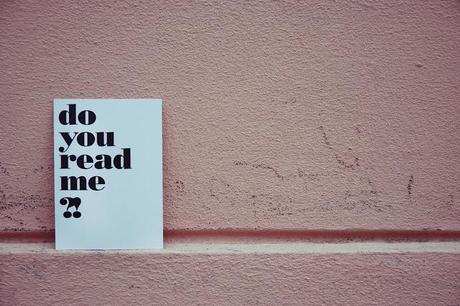
do you read me?! is the archetypal curated bookshop. It can be found in a pretty part of Berlin-Mitte. Its neighbors are the small galleries and coffee shops you find all over the quiet, charming streets near St. Hedwig’s hospital and the old Jewish cemetery. I was wandering around and exploring the area, so it was pure happenstance that I discovered the store. It’s a place with a clear focus, though not necessarily one that’s easy to put into words. It covers the many intersections where design, fashion, architecture, and politics meet. Force me to summarize its inventory and I’d say “contemporary culture” (with a decidedly European twist). As you might expect, it’s heavy on small-circulation, independent magazines and journals. Books are less prominent, but I uncovered a few gems I can’t imagine finding in more mainstream bookshops, and came away with a copy of Walter Benjamin’s Berlin Childhood Circa 1900.
Some cities get bookshops that capture and encapsulate them perfectly at a particular moment in time. Berlin, with its counter-cultural, forward-looking, and confident energy has do you read me?!
Shanghai-lights

Measuring the population of the world’s largest cities is a complicated and somewhat competitive business. Whatever method you prefer, at 24 million people Shanghai gets close to the top of everyone’s list. Getting an impression of such a huge place in a short time isn’t easy. I recently spoke at a conference in Shanghai (my first time there) and had the opportunity to spend a little more than a day checking out the city.
My first proper look was an early morning, bird’s-eye view when I opened the curtains in my 56th floor room at Le Royal Meridien. I looked down on the Huangpu river as it twisted through a forest of skyscrapers that stretched as far as I could see. A few of the buildings – the Shanghai Tower (the tallest in China) and the World Financial Centre, for example – stood out from an otherwise undistinguished mass of tall buildings. Later in the day, walking along the Bund, I was able to see some of the beautiful historical buildings that grew up at the turn of the 20th century when this was the financial powerhouse of east Asia.
However glossy the center of Shanghai might be, with its hundreds of brand-name stores lining Nanjing Road, within a block or two you can find small and surprisingly quiet streets with tiny shops selling a mass of merchandise. A little further afield is the French Concession, a residential and retail area set up in the 1840s that’s now very popular with visitors, housing small artisans’ stores and cafés in areas such as Tianzifang. I ended my day’s stroll in the Jade Buddha Temple, Most recently established in 1928, it’s a compound of buildings that houses numerous devotional statues, including two beautiful white jade Buddhas brought from Burma.

I’ve visited a few other cities in China: Beijing, Wuhan, Hangzhou, and Nanjing. Shanghai seemed to me, on the basis of my brief stay, one of the most interesting and distinctive. Also one of the most paradoxical: bustling yet often calm, huge but occasionally intimate, modern and historic. If an opportunity arises for a longer visit, I’m certainly going to take it.
Springtime in Beijing
Here’s something I never thought I would say. I’m starting to like Beijing. I’ve been visiting once or twice a year for the past decade, usually staying a few days on each occasion, but I never formed much of a connection with the city. I have to be honest – it has always struck me as a peculiarly featureless place, and the choking pollution and the horrible traffic haven’t helped much.

So, what’s changed? Well, the weather for one thing. On my most recent visit, a warm sun shone every day in a bright blue sky and there was barely a trace of the smog that normally covers the city. The lilac and cherry trees were heavy with blossom, brightening streets that previously seemed dull. It’s hard to overstate what a difference these things made. Beijing felt somehow washed or re-painted, making familiar places such as the Forbidden City look different. Mutianyu, a section of The Great Wall that I’ve visited several times, was especially transformed. As I walked along the wall with my family, it was possible to see distant stretches invisible on previous visits and get a glimpse of the extraordinary scale of the place. Flowering cherry trees close to the wall made it even more picturesque.
Beijing will never be one of my favorite cities, but I’m going to try to be more even-handed about it in the future. Go in the springtime and check the weather forecast – that’s my advice.
Days Without End
When they gave the Costa Book Award 2016 to Sebastian Barry’s Days Without End, the judges described it perfectly. “A miracle of a book – both epic and intimate – that manages to create spaces for love and safety in the noise and chaos of history“.
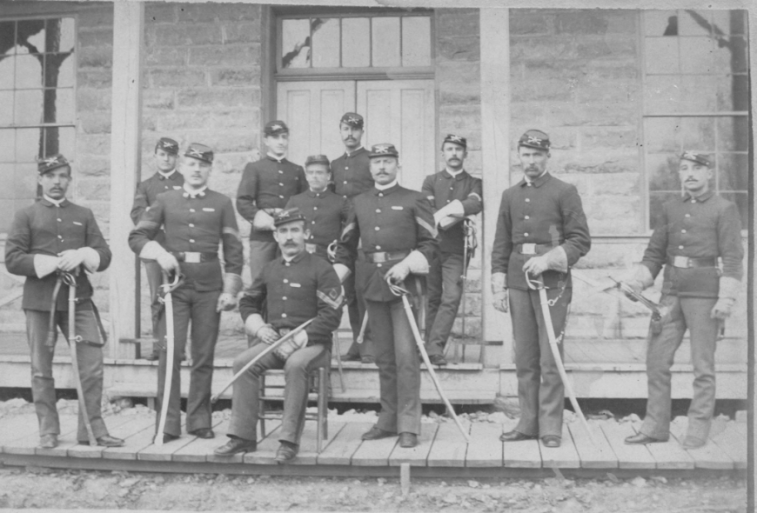
The novel is narrated by Thomas McNulty, an Irish-born immigrant, who enlists to fight in the Indian Wars and again in the Civil War on the Union side. His tale is of conflict and peace, of savagery, suffering, and tenderness, of hatred and love. Love most particularly for a fellow soldier, John Cole, and the Native American daughter they adopt and raise together.
In these times when America is so divided, uncertain, and suspicious, Days Without End is a piercing reminder of what millions of unnamed immigrants sacrificed for the country, what they gave, what they lost, and what they destroyed in the endless task of building and renewing America. It also reclaims for gay men a place in the past from which conventional history-telling has erased their memory. It’s a novel of unusual beauty and power, a shocking depiction of war and the experience of soldiers, and filled with tenderness found in the least likely of places and circumstances. Somewhat surprisingly, it’s also very funny in parts. It’s simply one of the best novels I’ve read in a long time.
 Miscellaneous Musings