
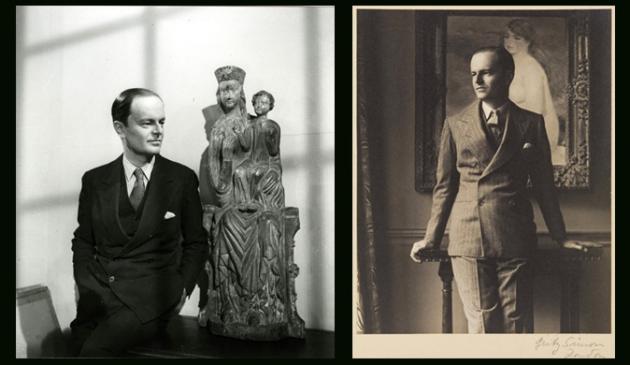
Kenneth Clark, art historian and administrator, critic and connoisseur, expert and populist, isn’t a widely known figure today, especially outside the UK. Yet in the late 1960s, his 13-part TV series, Civilisation, made him a household name and Britain’s best-known public intellectual. His early education seemed to predict a career as an art historian and academic, but his appointment at aged 27 to the position of Keeper of Fine Art at the Ashmolean Museum in Oxford and, at the remarkably early age of 30, as Director of The National Gallery, set him on a path as a curator and arts administrator.
His life and career were driven by a number of profoundly held and sincere beliefs: that art and artists matter, that government should play an important role in nurturing the arts, that he had a duty to public service and that his life’s vocation should be to promote, encourage, protect, and sustain them. So many of Britain’s finest artists – Henry Moore, Victor Pasmore, John Piper, Graham Sutherland, and scores more – were supported by Clark at critical points in their careers, most notably during the Second World War. Throughout his life, Clark looked for new ways to bring art into the lives of the British people and he was very successful doing so. He also had great influence as a taste maker, populist, and educator, and through his dedicated committee work steered the direction of many of Britain’s most important cultural institutions.
It has been my experience that few biographers write well. James Stourton, the author of Kenneth Clark: Life, Art, and Civilisation, is an exception. He writes elegantly, precisely, and sometimes beautifully. He focuses quite properly on Clark’s career and achievements, touching only lightly and uncensoriosly on his colorful private life, but leaves us overall with a very convincing and balanced portrait of a remarkable, important, and complex man.
 Miscellaneous Musings