
I had a picture-perfect day for my visit to these beautiful cities in Castile and Leon. Warm sunshine and blue skies, just right for strolling around their ancient streets.
Segovia is a UNESCO world heritage site. It’s a place crammed with architectural treasures. A stunning Roman aqueduct dating from the end of the 1st century CE, scores of Romanesque churches, monasteries, and convents, even a castle that inspired Walt Disney – far too many to list here. One place stood out for me among the memorable sights: the Iglesia de la Vera Cruz. More of a shrine than a conventional parish or monastic church, it’s set some way out of the city on a lonely road. It was consecrated in 1208 and built by the Templar Knights to house a fragment of the “true cross”. Modeled on the Basilica of the Holy Sepulcher in Jerusalem, it’s a very unusual piece of church architecture with its twelve-sided structure and multiple apses clustered around the tower.
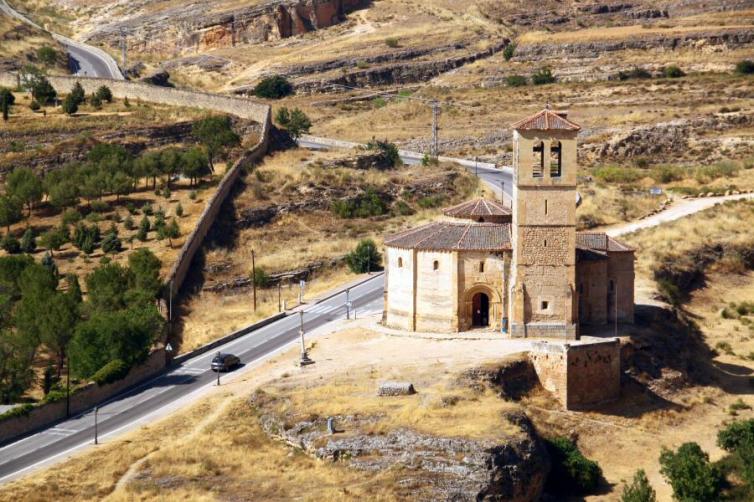
Segovia is a seductive city that opens itself up slowly once you get away from the larger squares and walk around its narrow, often empty lanes and side streets. It’s somehow a place of real warmth, somewhere that slows you down and quietens you. Long after the architecture has slipped from my memory, the early autumn sunshine on the sandstone buildings will be what I remember. That and a pilgrimage to have a lunch of cochinillo (suckling pig) at one of Spain’s gastronomic shrines, Mesón de Cándido.
Avila, by contrast, has no interest in seduction. It looks to intimidate and impress, as it has for centuries, with its perfect fortified walls and granite buildings. It’s an austere place, beautiful and imposing; a reminder of the hardships of Spain’s past.
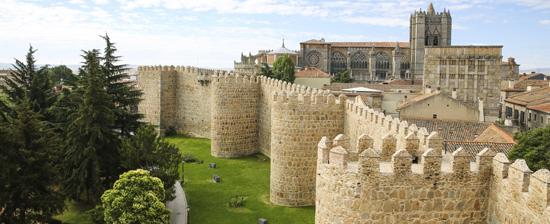
All credit to Spain’s national, provincial, and local governments for preserving such special places with great care.
 Miscellaneous Musings