Amsterdam

SONY DSC

I spent a lot of time in Amsterdam in the early 1990s, looking for office space and staff for a start-up with which I was involved in those days.  I got to know the city quite well at that time and grew to love it, and my affection has only increased.  I returned recently on a sunny, crisp autumn day after a gap of two or three years and found that I fell into a familiar and soothing groove that I must have dug twenty years ago: buying my newspaper at the Athenaeum Nieuwscentrum, reading it over breakfast at Koffiehuis de Hoek, strolling aimlessly along the canals towards Jordaan, followed by a browse in the market around the Noorderkerk and lunch in one of the city’s unique “brown cafés”.

Nothing important has changed.  The people of Amsterdam are as warm and welcoming as ever, eager to stop and talk (in flawless English, of course).  Ambling along the narrow canal side streets is as hazardous as it always was, thanks to the hordes of cyclists that weave carelessly and silently just inches from your shoulder.  Best of all, Amsterdam still has that gentle counter-culture, that wafer-thin layer of conformity, beneath which the uniquely Dutch “take us or leave us” attitude persists and thrives, and that combination of proud independence and openness to the world that seems to me to represent the best of the European ideal.  It was wonderful to be back.

 

The Geneva Trap

More “flight fodder” from Stella Rimington, my third this year and a gift from a friendly publisher.  It’s hard to explain the appeal of these novels.  The plots are barely credible, the characters are little more than ciphers, and the writing has all the subtlety of a sledgehammer.  Nevertheless, they’re engaging and entertaining enough, perfect distractions on long-haul flights when something more serious just won’t do.

mi5_crest_and_logotype-svg

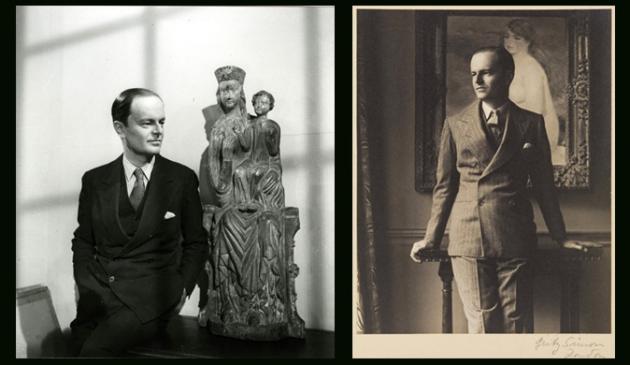
Kenneth Clark

5913

Kenneth Clark, art historian and administrator, critic and connoisseur, expert and populist, isn’t a widely known figure today, especially outside the UK.  Yet in the late 1960s, his 13-part TV series, Civilisation, made him a household name and Britain’s best-known public intellectual.  His early education seemed to predict a career as an art historian and academic, but his appointment at aged 27 to the position of Keeper of Fine Art at the Ashmolean Museum in Oxford and, at the remarkably early age of 30, as Director of The National Gallery, set him on a path as a curator and arts administrator.

His life and career were driven by a number of profoundly held and sincere beliefs: that art and artists matter, that government should play an important role in nurturing the arts, that he had a duty to public service and that his life’s vocation should be to promote, encourage, protect, and sustain them. So many of Britain’s finest artists – Henry Moore, Victor Pasmore, John Piper, Graham Sutherland, and scores  more – were supported by Clark at critical points in their careers, most notably during the Second World War.  Throughout his life, Clark looked for new ways to bring art into the lives of the British people and he was very successful doing so.  He also had great influence as a taste maker, populist, and educator, and through his dedicated committee work steered the direction of many of Britain’s most important cultural institutions.

It has been my experience that few biographers write well.  James Stourton, the author of Kenneth Clark: Life, Art, and Civilisation, is an exception.  He writes elegantly, precisely, and sometimes beautifully.  He focuses quite properly on Clark’s career and achievements, touching only lightly and uncensoriosly on his colorful private life, but leaves us overall with a very convincing and balanced portrait of a remarkable, important, and complex man.

Public libraries

I must have been four or five years old when my mother started taking me to the local public library.  A pattern developed in those early visits.  She would sit and read the newspaper or a magazine while I wandered around the shelves, collecting an armful of books to borrow, treasures for the week ahead.  On one occasion she lost me in the library.  Increasingly panicked, she asked the staff and borrowers to help search for me.  I was found safe and well a little later sitting in the chief librarian’s office.  The story goes – and I’ve been hearing it consistently from my mother for more than fifty years – that I asked for a job.  The librarian was kind enough to treat the precocious boy with greater seriousness than he deserved and gave him an application form.

indianapolislibrarylearningcurve

A lifelong love of reading, books, and libraries was born in that small, modest, public library in London.  A journey was started in those days, a journey into other people’s imaginations and my own, and into other worlds near and far.  The journey has never ended.  I cannot begin to describe the part books have played in my life, how they have shaped who I am.  Neither can I express my gratitude to public librarians who were my earliest navigators around the printed world.

It’s rare for me these days to visit a public library, though there’s an excellent one in the village where I live.  My reading tastes have settled and the reading paths I now follow are mostly well-trodden and familiar to me.  Although I’ve less need of expert guides, you’ll never convince me that public libraries are obsolete.  They’re no less essential than they ever were.  In fact, they’re more important, and will be for just as long as there are curious, hungry explorers like that little boy I was more than fifty years ago.

I discovered me in the library.  I went to find me in the library.  Ray Bradbury.

Newport, RI

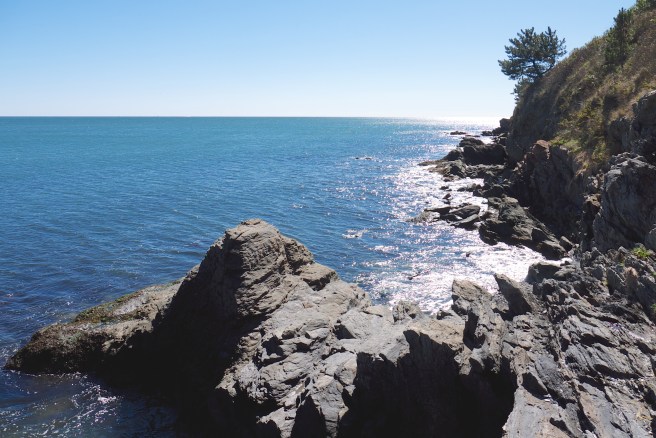
Early October proved to be the perfect time to make my first visit to Newport.  The weather was cooperative: warm, cloudless days ideal for walking and exploring.  I was delighted by the old part of the town and its streets of 18th century houses and good public buildings.  Newport’s glory, however, is its cliff walk of three and a half miles, which offers lovely views of the ocean.

cliff_walk_newport

The many hideous mansions that line the walk  – bloated monuments to the hubris, self-importance, and poor taste of the 19th century plutocrats who built them – don’t spoil the experience.  If you love architecture, you can safely ignore these mostly horrible pastiches of European grandeur and take instead a stroll down Spring Street, where you’ll find several perfect expressions of the 18th century vernacular style.

Exposure

It’s not easy to do what Helen Dunmore appears to do so effortlessly – write compulsively readable stories about things that really matter.  Exposure, set in London in the early 1960s, draws you right from the first page to its heart:224a893f894751e109e85699c885f227

“It isn’t what you know or don’t know: it’s what you allow yourself to know.  I understand this now.  It turns out that I knew everything.  All the facts were in my head and always had been.  I ignored them, because it was easier.  I didn’t want to make connections”.

Simon Callington, a junior employee at the Admiralty, is married to Lily, a German-born Jewish refugee.  They live a quiet, uneventful, middle-class life with their three young children in north London.  Quiet and uneventful until entrapment and a single moment of unthinking carelessness brings betrayal, disgrace, and imprisonment.

Dunmore chooses the framework of a fairly conventional espionage novel, but only, I suspect, because it suits so well her wider purposes, to explore shifting loyalties, the porous borderland between fidelity and betrayal, appearance and truth.  Her real preoccupation isn’t the traditional tradecraft of spies.  She goes to places more universal than that, into terrain that’s uncomfortable, uncertain, and ambiguous.  She knows that a human life is often an invention, a composite of what we choose to see and what we permit others to see, as well as those more deeply buried parts, covered sometimes in shame, fear, and regret – the pieces that can only be uncovered by love.

Dunmore is a wonderfully insightful writer of clean, precise, beautiful prose.  She has a very loyal following but deserves to be better known.

Bernabéu

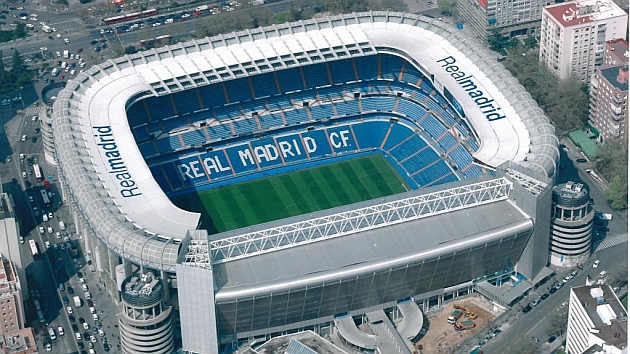
Every faith has its sacred sites, its places of pilgrimage.  Football is no different.  San Siro, Nou Camp, Wembley:  these are the places the devotees congregate to re-affirm their belief and often to have it tested.  For followers of Réal Madrid, Bernabéu is the Holy of Holies.  I joined 80,000 of them recently on what was my first visit to the stadium to see a game against Eibar.

1438549317_extras_noticia_foton_7_1

Faith encourages confession, so let me share a secret with you.  I was a little disappointed.  Not by the stadium, which was impressive enough, but by the faithful whose commitment was less forcefully expressed than I expected it to be.  I grew up watching football in England, where the passion of the fans is intense and relentless.  Dare I say it?  The Madrileños were surprisingly restrained in comparison.  A Spanish friend who joined me blamed the club’s years of success.  That makes sense.  Faith needs to be tested and adversity is the best way to do it.

Barrio De Las Letras

Few cities live café culture with the flair and passion of Madrid.  If you want to see the Madrileños enjoying it, I recommend you take a trip on any Sunday afternoon to the Barrio de Las Letras.  The neighborhood has had a long association with writers – hence the name – and is filled with cafés, bars, small shops and galleries.  It’s very central and only a few steps from the Paseo del Prado, but it feels quite secluded and self-contained.  Best of all, it feels like a real community, a place where people live and work, not some sterile, artificial “destination”.  Grab a table outside, a beer, a plate of paella mixta, and watch Madrid do what it does better than any city: unwinding with family and friends.

When evening arrives, the neighborhood’s many bars come to life.  I sat at the counter at Cocido de la Sena Daniela, and enjoyed a glass of Rioja and various tapas as I watched people come and go.  At one end of the bar a child, no more than six months old, sat on his mother’s lap, grinning and beating on the bar with his chubby fists, while at the other end a distinguished, elderly man, perhaps a widower, nursed his cognac.  Immediately beside me, a young woman slid to the edge of her bar stool so that she could lean in more closely and kiss her boyfriend. That’s Las Letras – a place everyone can find their place.

calle-huertas-barrio-de-las-letras

A Day in Segovia and Avila

I had a picture-perfect day for my visit to these beautiful cities in Castile and Leon.  Warm sunshine and blue skies, just right for strolling around their ancient streets.

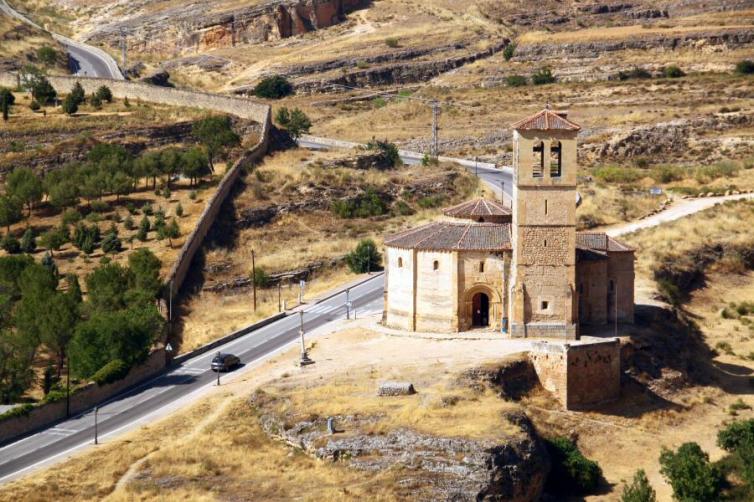
Segovia is a UNESCO world heritage site.  It’s a place crammed with architectural treasures.  A stunning Roman aqueduct dating from the end of the 1st century CE, scores of Romanesque churches, monasteries, and convents, even a castle that inspired Walt Disney – far too many to list here.  One place stood out for me among the memorable sights: the Iglesia de la Vera Cruz.  More of a shrine than a conventional parish or monastic church, it’s set some way out of the city on a lonely road.  It was consecrated in 1208 and built by the Templar Knights to house a fragment of the “true cross”.  Modeled on the Basilica of the Holy Sepulcher in Jerusalem, it’s a very unusual piece of church architecture with its twelve-sided structure and multiple apses clustered around the tower.

fotos-segovia-alcazar-014

Segovia is a seductive city that opens itself up slowly once you get away from the larger squares and walk around its narrow, often empty lanes and side streets.  It’s somehow a place of real warmth, somewhere that slows you down and quietens you.  Long after the architecture has slipped from my memory, the early autumn sunshine on the sandstone buildings will be what I remember.  That and a pilgrimage to have a lunch of cochinillo (suckling pig) at one of Spain’s gastronomic shrines, Mesón de Cándido.

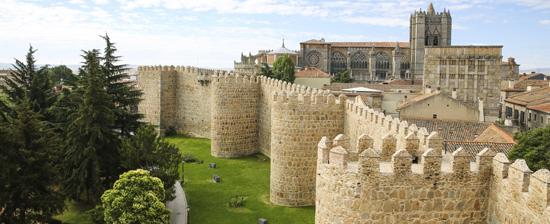
Avila, by contrast, has no interest in seduction.  It looks to intimidate and impress, as it has for centuries, with its perfect fortified walls and granite buildings. It’s an austere place, beautiful and imposing; a reminder of the hardships of Spain’s past.

muralla-avila-42877504-istock-jpg_369272544

All credit to Spain’s national, provincial, and local governments for preserving such special places with great care.