
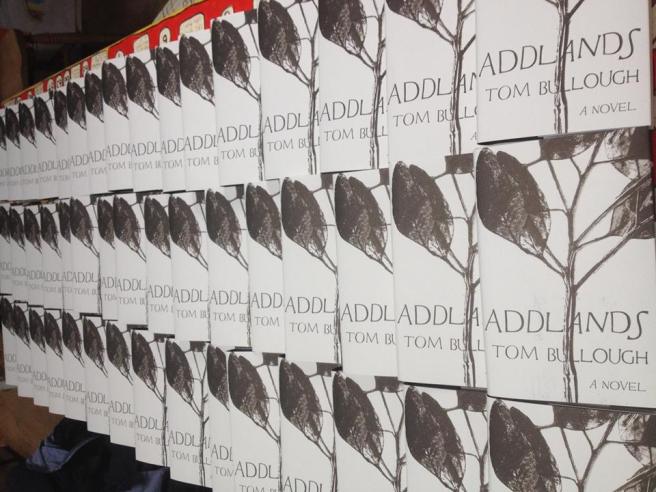
I had no idea novels such as Addlands were still being written. Novels rooted in the countryside, novels about people’s intimate connections to the land and to nature – the kind of novels that used to be commonplace and that the likes of Zola, Hardy, and Lawrence once wrote. I’m delighted I found this unforgettable book (through a review in the Financial Times, of all places), and not only because it introduced me to a wonderful new talent. It woke me up to an entirely new genre: modern pastoral fiction.
Addlands is set in the Welsh borders and tells the story of a poor farming family, the Hamers, over a period of seventy years (1941 to 2011). Nothing much happens that doesn’t happen in any human life – birth, death, love, work, enmity – but Addlands has the force of an epic. Reading it felt like listening to a long hymn to the land, to its rhythms and cycles, to humans and animals, and to the forces of the last century that are changing it all.
I considered having a dictionary close at hand when I started to read Addlands. Whilcar, fescue, wittan, dankering – these and many other words previously unfamiliar to me appear in the first few pages of the novel. I decided to forego the dictionary, thinking that the interruptions would obstruct my immersion into the extraordinarily vivid world created by Tom Bullough and into his sinuous, lyrical prose. I think I was right. This is a book to wash over you, to buffet you, to stun you. Understanding some of the words can wait for the second or even third reading that a novel of this power and skill demands and merits.
“In crystalline, perfect, and stunning prose, Addlands does what literature should unstintingly aspire to do; make individual lives the essential stuff of epic. The presence of this book – in shops, in homes, and in the minds of its readers – will improve the broken, atomized world. It’s an astonishing work of words.” Niall Griffiths.
 Miscellaneous Musings