Brexit Blues

brexit-shutterstock2

Although I remember the UK joining the European Economic Community in 1973, I was too young to pay any attention to the details.  For almost my entire life, the country in which I was born has been integrated politically and economically into the continent of Europe.  I have never looked at that integration as anything but positive.  Of course, I was aware that my enthusiasm for the EU wasn’t shared by all Britons, but their criticisms and complaints always seemed trivial and silly.  I could never take the “Little Englanders” very seriously.  Many, including most of the UK’s politicians, felt the same way.  That proved to be a very costly mistake.

More than forty years after its historic decision to join the EEC, Britons recently made another historic decision, this time to leave the EU.  Although that vote was only narrowly in favor of the exit, the choice was made and it’s irrevocable.  I’m convinced it’s one of the most important political decisions of my lifetime and one that will have very damaging consequences for the UK.

My family and I chose to make the United States our home ten years ago.  Throughout that time my sense of being a European and my pride in being a European have grown.  The idea that my children in the future might not be able to work and travel without restrictions in Europe is a horrible one for me.  They’re fortunate that they’re entitled to have Irish passports, so their future in Europe is secure, but others aren’t so lucky.  A young generation of British Europeans has been betrayed by older voters who were lied to by politicians eager to stoke the fires of fear and xenophobia.  All of us – young and old, Europhobes and Europhiles, wherever we live in the world and whatever our nationality – will be affected by that betrayal and those lies.
 

The Noise Of Time

Julian-Barnes-The-Noise-Of-Time

Imagine a regime so powerful, so intrusive, and so cruel that you lived under the constant threat of arrest, detention, interrogation, torture, and death.  Now imagine that such things could happen to you without warning, at any time of the day or night, not because you were a politician or activist, but because you were an artist, musician, or writer.  Would you be able to sleep, waiting for that knock on the door?  Or would you stand ready, dressed with your bag packed, for the fateful call?  How far would you go to survive and how much would you bend just to be able to work?  And even when the threat of violence had receded, when your fame protected you from physical abuse, how would you live with a regime that had total power to decide if your work was good or bad, permissible or illicit, available or banned?  Would you stand up for your artistic principles, risking state-imposed silence, or would you subtly comply with the state’s demands just to be given the opportunity to be heard?

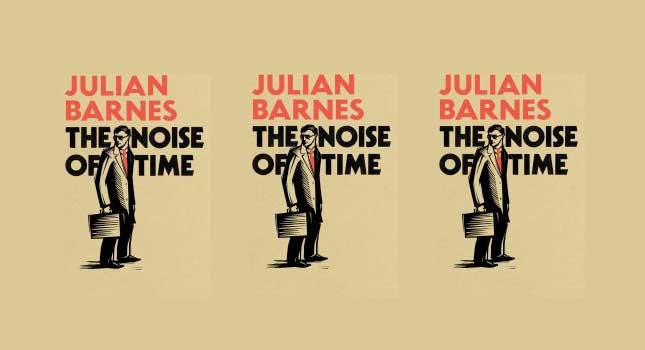
For Dmitri Shostakovitch and many, many others (including Prokofiev, Akhmatova and Solzhenitsyn), these were not theoretical questions, but a daily reality under Stalin’s Soviet Union.  Julian Barnes’s new novel, The Noise of Time, imagines three phases of the composer’s life, three symbolic “Conversations with Power”.  The first centers on 1936 and the denunciation by the regime of his opera, Lady Macbeth of Mtinsk.  The second takes place in 1948 when the composer was compelled to attend the New York Peace Congress in New York and obliged to publicly denounce Stravinsky and others.  In the final Conversation with Power, in 1960, after Stalin’s death and the accession of Khrushchev, Shostakovitch was forced into membership of the Soviet Communist Party, something he had resisted his whole life.

Reading The Noise of Time is like listening to an interior monologue or a fearful, anxious soliloquy, never spoken aloud. The subject of that soliloquy is what happens when Art conflicts with Power.  What should the artist do in that conflict?  Seek to be a hero and risk losing his life and the lives of his loved ones?  Or look to survive by hiding, bending, and evading, in the hope that the art he produces will say the things he cannot dare to say in other ways?

Breaking Cover & Close Call

97816204061759781632865267

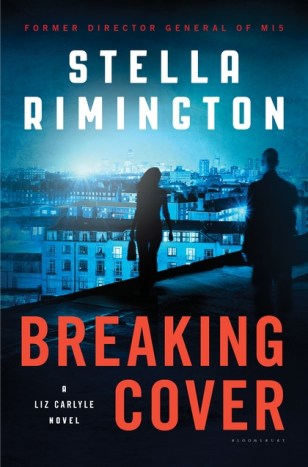
When the oppressively hot and humid days of a New York summer arrive I find it impossible to focus on “serious” fiction, so I asked a publishing friend to recommend some light, summer-friendly reading.  He sent me two spy novels by Stella Rimington.  Rimington is practically a household name in the UK, having been the first woman to lead its Security Service (MI5) and one of the first Director Generals to be publicly named by that notoriously secretive organization.

Both books proved to be easy, undemanding reads – just what I wanted.  Rimington’s world is a simple, clear-cut, and slightly old-fashioned one in which hard-working, dedicated intelligence officers outwit the bad guys, whether they’re home-grown British jihadis or old-style Russian spies.  The stories are simple enough (this isn’t Le Carré’s world of moral complexity and divided loyalties) and occasionally more-than-a-little implausible.  Who cares?  This is the kind of fiction where you suspend disbelief and go along for an enjoyable ride.

Measure For Measure

7410611810_690e8c40d8_o

It was especially interesting to see Shakespeare’s Measure for Measure during a uniquely rancorous election season in the U.S. and only two days after the UK electorate voted to leave the European Union, a campaign that was marked by an extraordinary level of deceit.  After all, this is a play partly about what we have a right to expect from our political leaders.  Is it OK for them to lie and to cheat?  Should they be held to higher ethical standards than the people they seek to lead?  And when they fail, as they so often do, should we forgive them?

This marked my first visit to the Hudson Valley Shakespeare Festival.  I can’t wait for the next time.  The setting was wonderful, with a view down the lawn overlooking the Hudson River.  The stage was nothing more than a square of dirt and the production had few props or costumes.  The result was focus in all the right places: on all that ethical and political intrigue and, of course, on Shakespeare’s beautiful verse.

High Dive

a4035985-9859-45e6-b12a-8ec4dd7351b5-460x276

I remember it very well.  The IRA’s attempt in 1984 to assassinate Margaret Thatcher and other prominent members of the Conservative government was the organization’s most audacious action of its long mainland terror campaign.  The idea was simple enough. An IRA volunteer planted a bomb in the Grand Hotel in Brighton, where the entire Cabinet was staying for the Conservative Party conference, and set the detonator 24 days in advance.  From the IRA’s perspective, the plan worked, at least in part.  The device exploded on schedule, causing devastation and generating huge publicity for the nationalist cause.  But the main target – the entire Conservative leadership, including the Prime Minister – escaped serious injury, though one Member of Parliament and some party officials were killed in the explosion.

The incident provides the background to Jonathan Lee’s novel High Dive but the bombing itself occupies only the last few pages.  The main part of the story focuses on three characters: the hotel’s deputy manager (tasked with preparing for the politicians’ visit), his teenage daughter working part-time at the hotel, and the volunteer who planted the bomb.  It captures three otherwise ordinary lives, each in the middle of a period of personal crisis, at an extraordinary moment.  The hotel manager, disappointed in his career and his marriage, facing serious illness; his daughter, temporarily adrift, looking for purpose and excitement; and the terrorist/freedom fighter, also searching for meaning.

High Dive made very little impression on me.  It’s one thing to show that the tragic victims of political violence (and even its perpetrators) are usually ordinary people – individuals with the same dreams, fears, and anxieties as everyone else.  It’s another to be able to elevate the ordinary and mundane into something significant.  Jonathan Lee wasn’t able to carry it off.