The Hotel Years

roth-joseph-e1401206858971

What must it have been like to live in Germany in the 1920s and 1930s?  As you went about your everyday life, reading the newspapers and paying attention to politics as a good, conscientious citizen should, how clearly would you have seen the edge?  Would you have known that your country and its leaders were heading towards it, that the momentum was unstoppable, and that just beyond the edge was the slow fall into hell?  How visible were the signs, how loud were the alarm bells?  Would it have been possible, if you had been paying attention, to put the puzzle together, to see the whole picture as each piece was revealed?

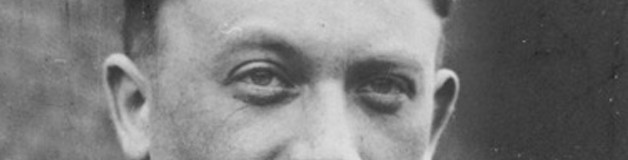
On January 30th, 1933, the very same day that Hitler became Chancellor, Joseph Roth, a celebrated journalist for the Frankfurter Zeitung, took a train from Berlin to Paris and never set foot again in Germany.  The Hotel Years collects some of Roth’s journalism from the 1920s and 1930s. These sixty-four mostly short pieces (known as feuilletons, a lovely word I’d never heard previously), catch Germany and much of central Europe on the brink of catastrophe.

It wasn’t Roth’s style to write explicitly political pieces.  His feuilletons are mostly exquisite observations – of people sitting alone in hotel lobbies, of a traffic accident, of migrants waving to strangers on a quayside – perfect miniature lenses through which an entire society is glimpsed.  Did his contemporaries, perhaps sitting down over their morning coffee and reading those frequent articles in the Frankfurter Zeitung, sense anything of what we see so clearly 90 years later – a world disappearing, a way of life on the brink of extinction?
Mansaf

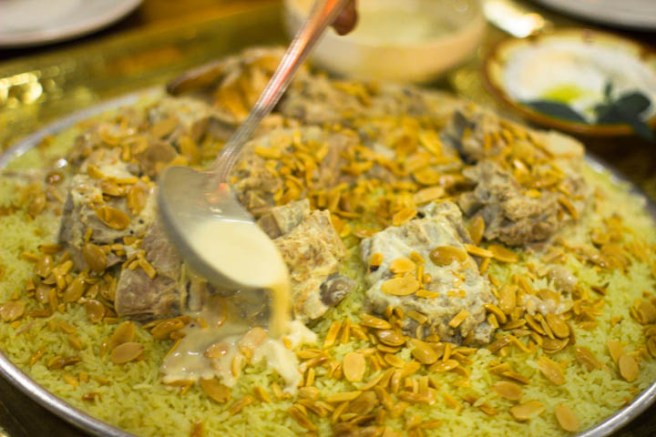
Mansaf – lamb cooked in a fermented yoghurt sauce, served with rice or bulgar, and garnished with almonds – is a traditional dish throughout the Arab world, but it’s especially popular in Jordan.  I tried it for the first time on a recent visit to Amman.  It’s typically served on special occasions – for example to welcome an honored guest or at weddings or birthday feasts – and usually eaten from a communal platter.

Jordanian_Food_Mansaf

Jordanians typically eat mansaf without using cutlery.  The rice, meat, and sauce are molded by hand (always the right hand!) into small balls.  I was told that it’s frowned upon to blow on the food no matter how hot it is!  Jordanians, the most courteous and hospitable of people in my experience, allowed me to use a spoon.   If you’ve never been to Jordan, there are hundred reasons to do so and mansaf is one of them.

Mothering Sunday

header_5

Back in 1983 Granta dedicated an issue of the magazine to the Best of Young British Novelists.  Almost all the authors featured have lasted the course and, more than thirty years later, some of them – Julian Barnes, Kazuo Ishiguro, Ian McEwan for example – have matured into outstanding writers.  Graham Swift was on the list.  Many years later he won the Booker prize for Last Orders, so he’s hardly unknown, but he hasn’t attracted the wide readership and huge sales of some of his contemporaries.  He isn’t especially prolific – I counted thirteen books in thirty-six years – and his work is more difficult to classify than his more famous peers, but I think he’s a better writer than almost all of them and one of a handful whose books I always buy as soon as they’re published.

Swift’s latest book is that rare thing – a novella.  Too short to be novels, too long to be short stories, novellas seem to have gone out of fashion.  Whether that’s because publishers discourage or dislike them (it’s tough to charge the price of a novel for something only a hundred pages or so long), or because it’s too challenging a form for most writers, I’m not sure.  It seems to suit certain writers: the careful and precise, those who weigh every word, those sensitive to the pace and rhythm of every sentence.

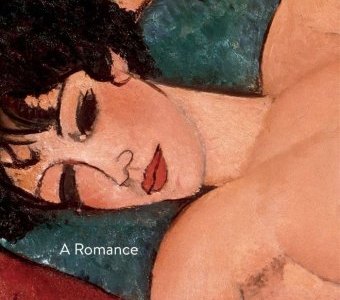
In Mothering Sunday, Jane Fairchild, celebrated novelist, looks back from old age to one momentous day in 1924 when she was a housemaid.  On the surface, it could hardly be a simpler story: a recollection of a few stolen hours with her middle class, soon-to-be married lover, Paul Sheringham.  She lies in bed one March morning, watching her lover get dressed before he leaves to join his fiancee for lunch, and then wanders naked and alone through his deserted house.  Simple, but in little more than a hundred pages, Swift gives us an entire world.  A world just emerging from the first world war but already preparing for the second.  A world of crumbling social norms and structures, a world dying quickly but unpredictably.  As Jane the housemaid, rising from her lover’s bed, sticky from sex and contraceptive cap still in place, moves naked through the empty house (the type of place she’s paid to clean), looking at paintings, touching dusty books, you feel not just an individual life on the brink of change, but a whole world.  The world of Paul and his kind is dying and out of its ashes a new one is emerging, one that will be claimed and shaped not by men and the former masters but by women and the sharp, strong, and confident servants like Jane.

This is an exquisite book, one that I can imagine reading over and over again in the future.  I loved every line of it.  How often can you say that?

London: Shepherd Market

I’m drawn in the busiest parts of the busiest cities to look for the spots that feel hidden.  Places that offer temporary relief from crowds and noise, places that feel as if they belong only to the locals.  Mayfair isn’t a neighborhood you’d normally associate with peace and quiet, but it has its havens if you know where to look.  I always try to snatch a few minutes to walk in Mount Street Gardens or sit in Farm Street church when I’m in the area.

Shepherd Market, though it’s hardly quiet in the evenings, is another one of those tucked-away places, sandwiched between Piccadilly and Curzon Street.  imagesLondon’s original May Fair was held here.  The square itself was laid out in 1735 and named after a local landowner called Edward Shepherd.  It’s always had a “colorful” reputation. Prostitutes and their clients were a feature of the neighborhood from the 18th century and it had a pretty seedy atmosphere until quite recently when a clean-up campaign was mounted by the local council and police. Now, with its historic pubs, art house cinema (one of the best in London, by the way), fancy shops, and a dozen or more restaurants, it’s become part of squeaky-clean Mayfair.

Much of its louche character may have been lost, but Shepherd Market still has one or two hidden gems.  Piccolo, an otherwise unexceptional takeaway sandwich shop, has a tiny basement cafe serving great English breakfasts, mostly to taxi drivers, police officers, and the very few visitors (like me) who know about it.  L’Artiste Muscle still occupies the same spot in the market where one of my favorite writers, Patrick Leigh Fermor, had dinner in 1938 before starting his epic walk across Europe to Constantinople.  Nearby is one of the best bookshops in London (Heywood Hill).  Even the Queen’s bookseller, Magg’s, has opened in the square, though I’m told that’s just a temporary move while it looks for a more permanent home.

Breakfast in Piccolo, followed (later in the day, of course) by a pint in The Market Tavern, a film at the Curzon Mayfair, and an hour or two browsing in the bookshops?  There are worse ways and places to spend your time.

Flying to Lebanon

IMG_1262

Don’t get excited.  I’m not talking about THAT Lebanon, the one famous for its cedar trees, its civil war, its refugee camps, and one of my favorite red wines, Chateau Musar.  I’m talking about Lebanon, New Hampshire, a more tranquil and – let’s be honest – altogether less exciting place.

I recently boarded the smallest plane I’ve ever traveled in – a nine-seat Cessna 402 – for the short flight from White Plains NY to Lebanon NH.  Guess what?  I learned something.  I learned that after 30+ years traveling around the world and probably tens of millions of miles of air travel, I hate small aircraft.  When it comes to matters of aviation, I’ve decided big is beautiful.  If someone builds an airplane the size of a city block, I’ll buy a ticket.  Just don’t ask me to fly in small planes.  Why?  Because when I’m flying I like to pretend I’m not flying, and that’s not possible in a Cessna.  Everything about the experience – every sight, every sound, every movement – reminds me that I’m doing something no one should be doing.  Flying.

It didn’t help that I left White Plains on a very stormy day.  I’m tempted to compare the take-off and landing to those nauseating roller coaster rides I used to loathe as a kid, but that wouldn’t be true.  When your stomach lurches on a roller coaster ride, the lurching is predictable.  You know when the feeling is coming and can prepare for it.  That wasn’t the case with my recent Cessna experience.  Just when I felt we were in for a period of settled air, the plane would shift violently left, right, up, or down in no predictable pattern.  Horrible.  The other thing I learned: I don’t want to watch pilots close-up.  I want them hidden behind a locked door, their magic and mystery intact and invisible to me.  I don’t need to see alarmingly young pilots grappling with the controls or looking bored.  I’m like one of those pre-Vatican 2 Catholics: I don’t need to see the priest’s performance to understand its significance.  Give me the mystique, not the reality.