
For me there’s one simple and true test of a great literary biography. Does it lead you (or lead you back) to the subject’s work? By this test, Jonathan Bate has succeeded in writing an outstanding biography. Before picking up the book it had been many years since I had read or listened to Ted Hughes, but Bate’s close engagement with the poetry encouraged me to go back to what had once been familiar work.
Bate’s compelling and persuasive account of Hughes’s work and life initially had the support of the poet’s notoriously sensitive estate. The fact that the support was withdrawn says a great deal more about Hughes’s executors than it does about the book.
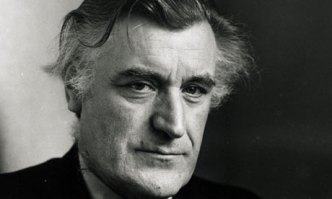
Surely they can’t have expected an exclusively “literary” study? It hardly seems plausible that they didn’t understand the extraordinarily intimate connection between the life and the work. More likely they were unhappy with some of the “revelations” about Hughes’s personal life. They shouldn’t have been anxious. Bate – a renowned literary scholar – is a scrupulously fair biographer and a critical admirer. Even-handedness was in short supply in some earlier accounts of Hughes’s life, with many biographers (and others) eager to make him “responsible” (whatever that means) for the suicides of Sylvia Plath and Assia Wevill. Ted Hughes has had to wait a long time for impartiality.
The central premise of the book is that Ted Hughes emerged as a poet of myths and archetypes but very gradually over a period of nearly forty years found a more personal and elegiac voice as he discovered ways to transmute his tragic personal experience – most particularly the suicide of Sylvia Plath – into verse of extraordinary power and appeal. Bate makes the case persuasively, though I still believe some of the earliest poems are among the best written by Hughes. Whatever one makes of Hughes the man or Hughes the poet, this compelling account of his life and work is going to stand as the authoritative biography – authorized or not – for a very long time.
“It’s my suspicion that no poem can be a poem that is not a statement from the powers in control of our life, the ultimate suffering and decision in us. It seems to me that this is poetry’s only real distinction from the literary forms that we call “not poetry””. Ted Hughes.
 Miscellaneous Musings