Outline

There’s something a little unsettling about disliking a book that everyone else seems to have applauded.  What did I miss?  Why did the virtues acclaimed by others leave me cold?  These and similar questions were on my mind as I read Rachel Cusk’s critically admired novel.  I wanted to like it, tried hard to understand why it seemed to attract so many plaudits, and ended up resenting both the time and effort I had invested and the trivial return I got from the investment.

41aQW6ctt1L._SX331_BO1,204,203,200_

If I had looked more carefully at the book’s cover, I would have noticed that most of the fulsome comments were from fellow writers.  That’s always a give-away.  What writers usually admire in the work of other writers – style – is rarely what readers think is important, and Outlook is a novel in which literary style is particularly prominent. The idea of a series of conversations being used to illuminate the character of the narrator (who’s an author teaching creative writing to wannabe authors, of course!) is an interesting one, but only if the conversations themselves or what they reveal are interesting.  That simply isn’t the case here.  Without that simple human interest, the whole effort felt  self-referential, an arid exercise in style – a writer’s book, not a reader’s book.

St. Lucia

DSC_1398

Some Caribbean islands have wiped away every trace of their local culture, so determined have they been to create homogenized winter playgrounds for tourists from all over the world.  It’s a short-sighted policy because it fails to recognize that many visitors want more than beaches and pools, visitors who can afford to take their dollars, euros, or whatever to other destinations offering something more distinctive.

St. Lucia, like its near neighbor Grenada, seems to be looking for the middle road.  It helps that the island is naturally distinctive, with its volcanic, hilly landscape, lush vegetation and stunning waterfalls.  The government is attempting to diversify the island’s economic base, moving into areas such as port facilities and petroleum storage.  Of course, many visitors won’t know or care about this, content with the stunning beaches, dependable weather, and warm waters, but it’s vitally important for the St. Lucians and their future.

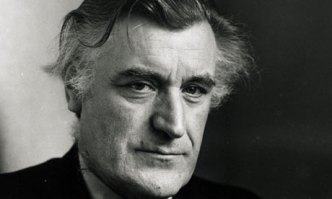
Ted Hughes: The Unauthorized Life

For me there’s one simple and true test of a great literary biography.  Does it lead you (or lead you back) to the subject’s work?  By this test, Jonathan Bate has succeeded in writing an outstanding biography.  Before picking up the book it had been many years since I had read or listened to Ted Hughes, but Bate’s close engagement with the poetry encouraged me to go back to what had once been familiar work.

Bate’s compelling and persuasive account of Hughes’s work and life initially had the support of the poet’s notoriously sensitive estate.  The fact that the support was withdrawn says a great deal more about Hughes’s executors than it does about the book.

Ted-Hughes-007

Surely they can’t have expected an exclusively “literary” study?   It hardly seems plausible that they didn’t understand the extraordinarily intimate connection between the life and the work.  More likely they were unhappy with some of the “revelations” about Hughes’s personal life.  They shouldn’t have been anxious.  Bate – a renowned literary scholar – is a scrupulously fair biographer and a critical admirer.  Even-handedness was in short supply in some earlier accounts of Hughes’s life, with many biographers (and others) eager to make him “responsible” (whatever that means) for the suicides of Sylvia Plath and Assia Wevill.  Ted Hughes has had to wait a long time for impartiality.

The central premise of the book is that Ted Hughes emerged as a poet of myths and archetypes but very gradually over a period of nearly forty years found a more personal and elegiac voice as he discovered ways to transmute his tragic personal experience – most particularly the suicide of Sylvia Plath – into verse of extraordinary power and appeal.  Bate makes the case persuasively, though I still believe some of the earliest poems are among the best written by Hughes. Whatever one makes of Hughes the man or Hughes the poet, this compelling account of his life and work is going to stand as the authoritative biography – authorized or not – for a very long time.

“It’s my suspicion that no poem can be a poem that is not a statement from the powers in control of our life, the ultimate suffering and decision in us.  It seems to me that this is poetry’s only real distinction from the literary forms that we call “not poetry””.  Ted Hughes.


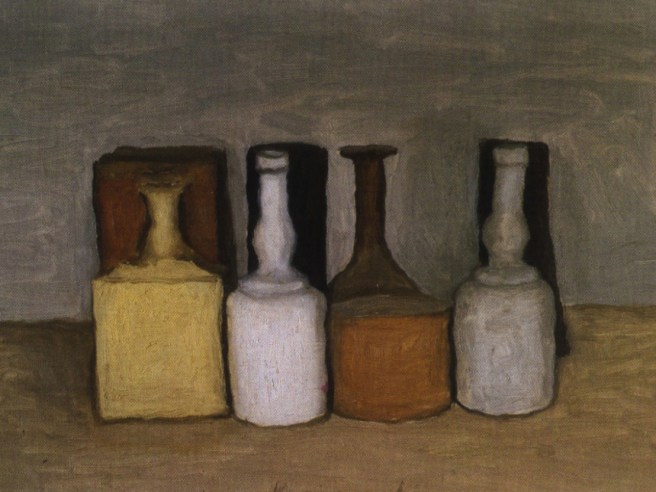
Giorgio Morandi

“I personally couldn’t care less about a bunch of bottles – but I’m sure glad Morandi could”.  Chuck Close.

Giorgio-Morandi-Still-life

I once visited Morandi’s small studio in Bologna. It was something of a pilgrimage for me because I had loved his calm, meditative paintings of simple domestic objects for many years.  There can be few painters with such a recognizable style, a style applied to such a narrow range of subjects.

This small exhibition at the Center for Italian Modern Art (CIMA) focused on Morandi’s paintings from the 1930s, a relatively unproductive decade for the painter and one in which he completed fewer than a hundred paintings. Work from that era is mostly held in private collections and only rarely exhibited publicly.  It was wonderful to see these paintings, a reminder of how an artist’s repeated engagement with familiar objects can provoke a much wider and deeper contemplation.

CIMA opened only two years ago and is a great addition to New York’s gallery scene. It’s something of a secret treasure.  It occupies the fourth floor of a nondescript building in SoHo and only visitors with an appointment are admitted.  Once inside, a large, elegant gallery, all clean, white lines provides a lovely setting for paintings and sculpture.

Night

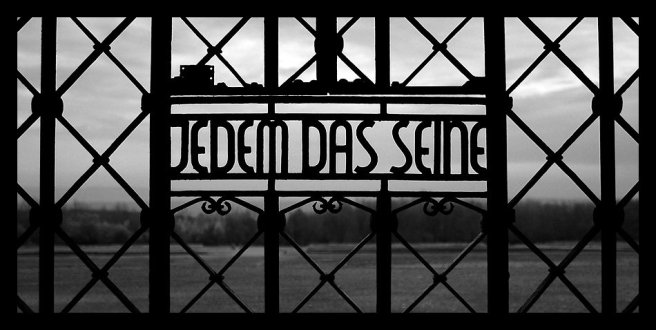
Millions of voices were silenced by the Holocaust, leaving millions of stories untold and millions of memories never shared.  The murdered multitude who will never bear witness speak through the testimonies of those who survived and recorded their experiences.  The literature of the Holocaust speaks, weeps, and remembers for the millions who will never again speak, weep, or remember.  That’s its power.  Every elegy, unique in itself, is sung by millions of voices we will otherwise never hear.  The soloist is a choir.  What’s individual is also communal.

tumblr_static_ulcsadu96lw80wgssgskcwws

Night is Elie Wiesel’s account of the year he spent as a teenager in Auschwitz-Birkenau and Buchenwald, a year in which he lost his mother, father, and sister to the Nazis’ crematoria.  You may have read, as I have, many accounts of those years – the forced marches, the hunger, the beatings, and the systematic extermination of millions of Jews – but nothing can prepare you for Wiesel’s short memoir.

It’s impossible to find the words to describe how powerful, moving and beautiful Night is.  It’s a work of art, not just of reportage.  It should be read by everyone, preferably in Marion Wiesel’s translation and with Francois Mauriac’s original introduction from 1958.  Books such as these can change lives.  If we let them.  If we reflect and take their message deep inside ourselves.  If we do more than mourn and remember, but also take action in a world that has given us and continues to give us so many new horrors: apartheid, countless wars, genocides, and the forced migration of millions of innocent people.

“For the survivor who chooses to testify, it is clear: his duty is to bear witness for the dead and for the living.  He has no right to deprive future generations of a past that belongs to our collective memory.  To forget would not only be dangerous but offensive: to forget the dead would be akin to killing them a second time.”

The Bell Jar

I last read The Bell Jar in February 1980.  I know that because the date is penciled into the faded, yellowed paperback I picked from my bookshelves recently.  I’m not sure why I chose to re-read it now.  It may be because Sylvia Plath has been on my mind recently.  I’m reading and enjoying Jonathan Bate’s biography of her husband, the poet Ted Hughes, in which she features prominently.  (More about that another time).  Or perhaps it was because I realized I couldn’t remember a single thing about a novel that is supposed to be harrowing and unforgettable.  Thirty-six years since my first encounter seemed like as good a time as any to re-engage with it.

thebelljar

Several things surprised me.  I had forgotten the dominant tone – the controlled, but intense bitterness – and how extraordinarily angry a book it is, considering how young Plath was at the time. (She was only 30 years old when it was first published under a pseudonym in 1963). It strikes me now, though it didn’t in 1980, as the work of a very young writer.  I closed the novel for the last time feeling impressed and disappointed at the same time.  There is some wonderful and very unsettling writing in it and beautiful, startling imagery, but it also feels rushed, like something the author needed to excrete urgently.  Her true voice – frenzied and cynical – found its perfect expression in the late poems.  The Bell Jar feels like a dry run, someone testing how their final, prolonged scream might sound.